

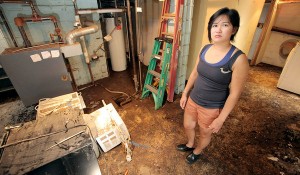
Close-up of Water Damage
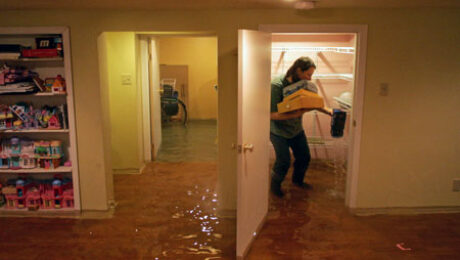
SPRINGFIELD, Ill. (AP) — Diane Hopp says she doesn’t have a green thumb, so if her neighbors were around, they might be surprised to see her spraying a garden hose — particularly in December inside the living roo m of a newly renovated home.
“It really bothers me to see all this mess, and that we did it,” she said.
The insurance agent from Petersburg, Ill., was one in a line of hose-wielders helping christen the small, frame structure on the edge of downtown Springfield — fondly nicknamed “flood house” — as part of an unusual experiment to assist the untold thousands who bemoan indoor flooding from the showers of spring and the burst pipes of winter.
The owner of the house, Peerless Cleaning and Restoration Services, says it is one of just a few “flood houses” it knows about. The company intends to flood it twice a month to help insurance agents know better what to do when a client calls, real estate agents more readily spot long-ignored problems that spawn mold, and eventually would-be technicians in learning to run vacuums and moisture meters.
The company promised that within days the custom rebuilt structure — outfitted with its own industrial strength sprinklers and spigots sticking out of the walls — would be bone-dry and ready to be doused again for the next demonstration.
Michael Barry, a spokesman for the Insurance Information Institute, said Americans generally underestimate the chances they’ll be hit by unwelcome water. He said he hadn’t heard specifically of “flood houses,” but applauded efforts to teach homeowners and agents what’s at stake.
“Any time you can expand public understanding of the risk a homeowner faces, it’s a good thing,” Barry said.
Water damage is the second-leading cause of insurance claims in Illinois, according to 2009 data from State Farm Insurance Cos. After wind and hail, water wreckage comprised the largest number of claims, averaging $7,900. Crime was third, and a different kind of water devastation — drain and sewer backups — was fourth, averaging $8,800 per claims.
Decatur, Ill.-based Peerless thinks its novel “flood house” laboratory will add depth to classes like “Hands-on Water Damage,” which they offered in December to nine insurance agents and assistants needing continuing education credits. Company officials said they know of a handful of such houses around the country and had seen a couple, but not outfitted like theirs.
When the company moved its Springfield location last summer, it bought and remodeled the house across the alley for about $90,000, adding carpeting, a restored hardwood floor and fresh paint — all ready to be drenched.
Learning what goes into drying soaked carpets, drywall with insulation behind it, and ceilings buffeted by leaking upstairs toilets — and then seeing it happen — pays dividends when that panicked call comes in from a client, said Matt Bennett, an agent from Forsyth, Ill., who attended the demonstration.
“You know what questions to ask,” Bennett said. “When the homeowner says, ‘I have a small leak,’ you know that’s how it appears, but we can take what they tell us to find out if there are hidden sources of the problem.”
After a morning learning about degrees of contaminants in water and how many dehumidifiers are necessary per cubic foot, the group assembled on the first floor of the flood house, which was bright, clean and kitchen-less. Peerless vice president Todd Garner then cranked on the first sprinkler over a glass-top table and padded chairs, onto the hardwood floor.
It sounded like rain pounding on the table. Water shooting in all directions from the sprinkler heads gave a carousel effect as Garner maneuvered levers in the wall. Nearly everyone in the room wore a sheepish smile, perhaps feeling a little sick. That’s the point.
“You have a customer who’s gone for a weekend, and a half-inch line breaks, it’s going to be whipping out a lot of water,” Garner said earnestly.
The agents took turns with the garden hose, saturating the carpet, then later returned to test water extraction methods, from the hardware-store bought wet-dry vac to a Segway-like riding machine that professionals use. The high-end model sucked nearly all the water out of not only the carpet, but the pad underneath.
“When someone calls, if you’ve never lived through a disaster, you haven’t any idea what they’re experiencing,” said Hopp, who processed claims from a deadly Petersburg tornado last New Year’s Eve. “Now we see what they’re seeing.”
[footer1]
- Published in In the News
Outages – What you need to Know
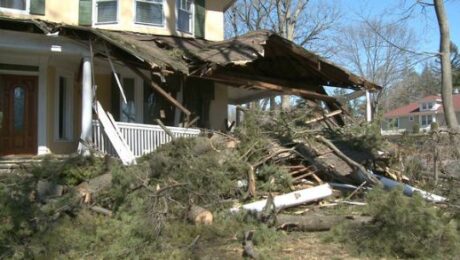
 After one of the largest snowstorms in decades, the Northeast will now be without power for a third day. This snow storm has brought down trees and power lines, and knocking out electricity to customers in Connecticut, New York, and New Jersey. The damage is now widespread and could possibly take a week to regain energy. The storm spread wind, rain and snow from West Virginia to Maine. Wet, heavy snow fell on trees that hadn’t yet shed their leaves, causing branches to break and bring down power lines and damage roofs of homes.
Many people, aside from having no power, have damage to their homes because of this terrible storm. As a policy holder it is important to know what is covered under your policy. Many people are unaware of things that you can claim from your insurance such as food loss or loss of use. It’s important to understand your policy and if it includes damage caused by snow, hail, ice and sleet. It may also cover the occasional plumbing problems, frozen pipes, and power outages. Contact a public adjuster to get claim help and understanding of how they can assist you to recover from your loss.
Below are some tips from NJ Office of Emergency Management pertaining to the hazards of power outages and what to do.
- Call your utility to determine area repair schedules.
- Listen to your battery-powered radio or television for updated information, and for any directions from public safety officials.
- Remember: A battery-powered radio is a key part of your Emergency Supply Kit.
- Use only a battery powered light, such as a flashlight, for emergency lighting! Due to the extreme risk of fire, DO NOT use candles during a power outage.
- Avoid elevators.
- Turn off or unplug lights and appliances to prevent a circuit overload when the power returns. Leave one light on to let you know when power has been restored.
- Protect yourself from carbon monoxide poisoning:
- Do not operate generators indoors.
- Do not use charcoal to cook indoors.
- Do not use your gas oven to heat your home.
- All of these activities can cause a deadly buildup of carbon monoxide gas. Use space heaters with proper ventilation.
- Keep your refrigerator and freezer doors closed as much as possible to avoid food spoilage.
- Be sure to check on neighbors, especially the ill, those with electric-dependent medical needs and the elderly.
- If it is cold outside:
- Turn on faucets slightly to prevent pipes from freezing. Running water will not freeze as quickly.
- Put on layers of warm clothing.
- NEVER use your oven as a source of heat!
- If power may be out for a prolonged duration, plan to go to another location that has heat to keep warm.
- During a heat wave:
- Watch for heat-related illnesses, especially in children who may not be able to verbalize how they feel.
- Drink plenty of water, even if you do not feel thirsty.
- Provide plenty of fresh, cool water for your pets.
AFTER A BLACKOUT: WATER TREATMENT
In addition to having a bad odor, and taste, water from questionable sources may be contaminated by a variety of microorganisms, including bacteria and parasites that cause diseases such as dysentery, cholera, typhoid, and hepatitis. All water of uncertain purity should be treated before use.
The American Red Cross recommends the following steps for treating water after a power outage or other emergency, if the water’s purity is uncertain:
- Filter the water using a piece of cloth or coffee filter to remove solid particles.
- Bring it to a rolling boil for about one full minute.
- Let it cool at least 30 minutes. Water must be cool or the chlorine treatment described below will be useless.
- Add 16 drops of liquid chlorine bleach per gallon of water, or 8 drops per 2-liter bottle of water. Stir to mix. Sodium hypochlorite of the concentration of 5.25% to 6% should be the only active ingredient in the bleach. There should not be any added soap or fragrances. A major bleach manufacturer has also added Sodium Hydroxide as an active ingredient, which they state does not pose a health risk for water treatment.
- Let stand 30 minutes.
- If it smells of chlorine, you can use it. If it does not smell of chlorine, add 16 more drops of chlorine bleach per gallon of water (or 8 drops per 2-liter bottle of water), let stand 30 minutes, and smell it again. If it smells of chlorine, you can use it. If it does not smell of chlorine, discard it and find another source of water.
FOOD SAFETY
Remember: Food that has not been refrigerated can cause severe health problems.
- Published in In the News
Power Outage Updates

 Hurricane Irene update: latest on N.J. power outages
STATEWIDE — As of 9 a.m., PSE&G said there were 250,000 customers without power due to the heavy winds and driving rain caused by Hurricane Irene.
About 70,000 customers already had power restored, PSE&G said. The company, the state’s largest electric and gas utility, provides service to 2.2 million customers.
Around 170,000 JCP&L customers in New Jersey have lost power, according to spokesman Ron Morano, mostly in Monmouth, Ocean and Middlesex counties.
The Oyster Creek nuclear plant, which is on the Atlantic Coast south of Toms River, shut down on Saturday before Irene’s arrival, while PSEG’s nuclear plants near Lower Alloways Creek were still running Sunday morning.
“All three units remain at full power no issues at all,” said spokesman Joe Delmar at 8 a.m.
Delmar said wind speeds hadn’t come close to the site’s “unusual event” cutoff of 74 miles per hour that must be reported to the Nuclear Regulatory Commission.
“We’ll continue to monitor river levels as the storm settles down,” Delmar said. “It’s at low tide right now.”
As of 9:00 a.m. Sunday:
• A.C. ELECTRIC: 89,600
• PSE&G: 250,000
• JCP&L: 170,000
Storm conditions will likely delay repair efforts, said one PSE&G official early this morning.
“Crews will begin to restore service once the heavy winds subside and it is safe to work on overhead electric lines,” said Karen Johnson, spokeswoman for PSE&G. “Customers should be prepared for potentially lengthy outages.”
More power outages may be in store as forecasters predict maximum sustained winds between 40 to 50 mph with gusts up to 70 mph, according to the National Weather Service.
As rainfall from Hurricane Irene ramps up, southern Jersey is getting hit the hardest with widespread outages. In northern Jersey, PSE&G reported outages due to heavy winds that knocked trees and limbs onto power lines.
In Atlantic City, widespread outages were also reported and casinos closed for only the third time since gambling was legalized in the state in 1978 due to the storm.
[footer1]- Published in In the News
Rapid Hurricane Rina
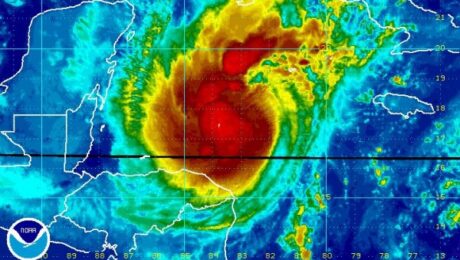
Rina, the 17th named storm and sixth hurricane of the 2011 Atlantic hurricane season, formed on October 23, 2011. Rina rapidly intensified from a tropical depression to a Category 1 hurricane with 75 miles per hour winds in 21 hours. The rapid intensification came due to the extremely warm waters over the western Caribbean. The forecast track and intensity of the storm is very complicated as the models are having a difficult time figuring out what Rina will do.
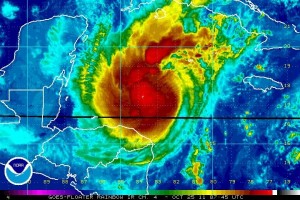
Rainbow infrared image of hurricane Rina on October 25, 2011. Image Credit: National Hurricane Center
For now, hurricane Rina is expected to gradually strengthen into a major hurricane and push into the Yucatan Peninsula by Thursday. Â After that, Rina will likely weaken and push to the east or northeast. Â Everyone from the Yucatan Peninsula, Cuba, and southern Florida should monitor Rina as the storm poses a threat to these regions.
As of 5 a.m. EDT today, hurricane Rina is a Category 2 hurricane with sustain winds of 100 mph. It has a pressure of 975 millibars (mb), and is currently pushing very slowly to the west-northwest at 3 mph. Â A tropical storm watch has been issued for the Yucatan Peninsula from Chetumal to Punta Gruesa. Â Meanwhile, a hurricane watch is in effect from north of Punta Gruesa to Cancun. Â Hurricane warnings will likely be activated later tonight into Wednesday morning as Rina approaches the Yucatan Peninsula.
Here is the forecast track for hurricane Irene from the National Hurricane Center (NHC):
 Five day forecast track of hurricane Rina by the NHC.
Hurricane Rina is currently over the warmest waters in the Atlantic basin.  The warm waters are not only at the surface, but extend deep into the ocean.  When a storm is over a depth of very warm waters, upwelling cold water is typically never an issue.  Instead of upwelling cooler water from the surface, the storm simply upwells warm water which can provide it more fuel to strengthen.  Here’s a look at the warm waters in this area:
 Heat content in the Atlantic ocean is the warmest in the Caribbean.
The intensity forecast is rather difficult. Rina is a small storm, so it is capable of developing rapidly in the next 24 hours. Â The larger the storm, the more time it takes for it wrap around itself, tighten up, and become a stronger storm. Â However, small storms are also vulnerable to wind shear and dry air which can invade the system rather quickly.
There are three things tropical systems hate: wind shear, dry air, and sea surface temperatures below 80 degrees Fahrenheit. With this in mind, let’s take a look at a few features:
 Water Vapor imagery on October 25, 2011 showing dry air in the Gulf of Mexico. Image Credit: CIMSS
The image above shows water vapor across the United States and the Atlantic basin. The darker the colors, the drier the air. The darker shades of gray and white indicate more moisture in the atmosphere. It is very evident that there is very dry air in the Gulf of Mexico. Â If Rina pushes into the Gulf, dry air could be a huge problem for Rina. Once Rina begins to drag dry air into the core of the system, weakening will be likely.
 Wind shear analysis on October 25, 2011. Wind shear is fairly high in the Gulf of Mexico. Image Credit: CIMSS
Not only is dry air significant in the Gulf of Mexico, but so is wind shear. Â Wind shear of around 30 to 50 knots can be found around the gulf, which does not bode well for tropical systems. If Rina wants to intensify, it must do so while it is in the western Caribbean. Â Once it approaches the Yucatan Peninsula and moves near Cuba, weakening will be very likely as wind shear increases.
The models are having a difficult time figuring out the exact track for hurricane Rina. For now, the models are showing the system pushing into Yucatan, weakening, and eventually moving due east and dissipating.  Towards the end of the week, a decent trough, or extended area of low pressure, will push into the eastern United States.  If the storm is relatively strong, Rina could “feel†the effects of the trough digging south.  If this happens, Rina will likely be pulled to the northeast and merge into the frontal system.  However, models show enough weakening that Rina does not feel the pull from the trough, thus staying in the Caribbean and dying out due to high wind shear and dry air intrusion.
Forecast track and especially intensity is still uncertain. Â Hurricane Rina is expected to become a powerful Category 3 Â hurricane with 115 mph winds in the next 36 to 48 hours. It is possible the storm could be stronger than that, especially if wind shear and dry air does not enter the system and it stays over the very warm waters in the western Caribbean. If a trough somehow picks up Rina, the storm could impact southern Florida as a weak hurricane or strong tropical storm by the end of the week. Regardless of the track, everyone along the Yucatan Peninsula, Cuba, and southern Florida should keep a close eye on Rina as the storm spins in the western Caribbean. You can get the latest updates on Rina by visiting the National Hurricane Center.
- Published in In the News
Slab Leaks – Water Damage
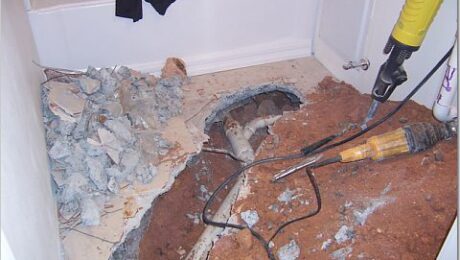
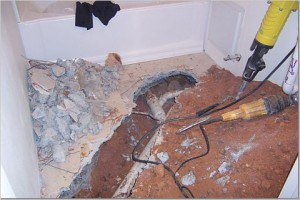
We have come across many insureds with water damage caused by a pipe breaking under the slab. Unlike a general leak, a slab leak can be very expensive to fix especially if not identified immediately. There really is not much you can do to prevent them in terms of maintenance.
Slab leaks can be caused by both incoming or discharge water. If you check your water pressure, and your water pressure is less than normal, you could have flooding under the slab. The pressure in the pipe will remain the same and gets released before it gets to your fixtures. If the flooding is caused by an outgoing pipe, then it can cause problems under the slab and eventually be detected by the ground shifting, unusual flooding or foul odor.
In the event that you think you may have a slab leak here are some basic things you need to know:
First, find where the leak is coming from (Look for wet floors, walls, or outdoor area). If it is not visible, contact a plumber. A plumber can bring a camera and do what is known as a “leak detectionâ€. Photograph the area and all the damages that are visible. If you sustain damage to your walls, floors, etc. contact a public adjuster. It is important that every item that gets damaged is documented and photographed. Also, it is important to remember that water damage causes mold and mildew and can cause further damage to your property. You might want to contact a water restoration company to make sure that all of your items are properly dried out and that they are not contaminated with mold. Also, if you are unable to live on the premises, then a public adjuster can get you money for additional living expenses.
Get the Professionals Involved
Water damage to a property can become very severe if not treated properly. Contact an insurance claims profession who has experience in helping homeowners handle water claims. At All American Public Adjusters, you will find insurance experts who can help through the insurance claim process. Also, if you feel that your insurance company has not reimbursed you properly, contact us and we will help negotiate your claim for you.
[footer1]- Published in Blog
Policy Coverage Endorsements

| ADDITIONAL COVERAGE BY ENDORSEMENT Our policies are designed to meet the needs of our average policyholder. We chose to exclude coverages most of you do not need. However, after reviewing the basic coverages automatically provided, you may feel your unique needs require more specific or additional protection. We may be able to provide that protection by endorsement. An endorsement is an attachment to your policy that amends the coverages already provided. The following are some of the more commonly purchased endorsements and the coverages they provide; others are available upon request. If made a part of your policy, each of these endorsements will result in an additional charge. Let us customize a policy for your specific needs. Policy deductible applies to each endorsement unless otherwise indicated. HO-32 Special Coverage Endorsement — (Condo Unit policies only) Without this endorsement, damage to the residence premises is covered only if it is caused by one of the perils listed in the policy. This endorsement provides broader coverage — responding to any cause except for those specifically excluded. For instance, this endorsement would cover accidental damage to floors, ceilings and walls such as spilling paint, or scorching a kitchen countertop with a hot pan. HO-35 Loss Assessment Coverage — If you belong to an association of property owners, and if the association is liable for someone else’s Bodily Injury or Property Damage, or if you must pay your share of covered damage to the group’s jointly owned property, the policy will cover up to $1,000 of your share of this cost. This endorsement permits you to buy coverage higher than $1,000 or coverage for more than one location. HO-48 Other Structures — If you feel that the limit for Coverage B Other Structures automatically provided by your policy (10% of your Coverage A Dwelling limit for one– and two-family residence in New Jersey and Pennsylvania; 5% of your Coverage A Dwelling limit for three– and four-families applicable to New Jersey policies only) is not sufficient, this endorsement can be used to increase your coverage. HO-53 Credit Card, Fund Transfer Card, Forgery and Counterfeit Money Coverage — All policies will pay up to $500 if your credit card or fund transfer card is used by an unauthorized person, or if you experience a loss as a result of a check forgery or the acceptance of counterfeit money. If you feel that $500 is not enough protection, this endorsement is used to increase your coverage. (Policy deductible does not apply.) HO-61 Scheduled Personal Property (available to New Jersey Manufacturers Insurance Company policyholders only) — This endorsement provides broader protection for specific articles of jewelry, fur and/or silverware by describing the covered items on your policy. An up-to-date appraisal which must be acceptable to our underwriters is required for each item before coverage can be afforded. For additional information, please request a Scheduled Personal Property application package. (No deductible applies.) HO-65 Coverage C Increased Special Limits of Liability — This endorsement can be used to increase the basic coverage for items 1, 2, 5, 6, 7,10 and/or 11 in the special limits Other lnsured Locations —If you own and occupy another one– or two-family residence, this endorsement can extend your Personal Liability and Medical Payments to Others coverages to that location. (Policy deductible does not apply.) This endorsement is also applicable for New Jersey policies for three– or four-family residences that you own and occupy. HO-70 Additional Residence Rented to Others Coverage — For an additional premium, you may extend your policy’s Personal Liability and Medical Payments to Others Coverages to any one– or two-family residence you own and rent to others. HO-75 Watercraft Endorsement — All policies automatically provide Personal Liability and Medical Payments Coverages for: (1) any watercraft equipped with inboard or inboard-outdrive motor power of 50 horsepower or less if rented to you, (2) a sailing vessel less than 26 feet in length if owned by or rented to you, and (3) any watercraft powered by one or more outboard motors with 25 or less total horsepower if the outboard motor(s) is (are) owned by you. If you own or rent a type of watercraft not included above, Personal Liability and Medical Payments may be obtained by purchasing this endorsement. Damage to your watercraft itself is not covered by this endorsement. (Policy deductible does not apply.) HO-76 Limited Escaped Fuel Liability Coverage — Applicable to policies first written in New Jersey on January 1, 2009 and later, and Pennsylvania policies first written on June 1, 2009 and later. Coverage for personal liability due to leaks from fuel systems such as oil tanks is excluded from your policy unless you purchase the HO-76 endorsement, which will provide $100,000 in liability protection. Your first policy year is your ONLY opportunity to purchase this endorsement. If you decide to purchase the HO-76, you will also have $10,000 of coverage, at no additional charge, for remediation and/or restoration expenses that are a direct result of covered liability claims for fuel leakage. Fuel tank replacement is not included, but expenses incurred for property restoration using like kind and quality soil, shrubs and other landscaping materials would be covered. You will not have this remediation coverage without purchasing the HO-76. The HO-76 endorsement will remain on your policy each year at renewal unless you request to remove it. Once coverage has been withdrawn it cannot be reapplied. If you are a Pennsylvania policyholder insured prior to June 1, 2009, liability for leaking fuel systems will continue to be covered without the need for any endorsement so long as your policy remains in effect. HO-95 Water Back-up and Sump Overflow Coverage — The standard policy does not provide coverage for damage caused by water back-up and for water overflowing from a sump. However, if you inform the NJM Insurance Group that your dwelling has a sump pump, this endorsement will provide up to $5,000 for this type of loss, even if it is caused by the mechanical breakdown of the sump pump. Coverage does not apply, however, to the sump pump or related equipment caused by mechanical breakdown. The maximum benefit limit is concurrent with your other coverage amounts; it does not increase the total limit of Coverage A (Dwelling) for HO-2, HO-3 and HO-6 or Building Additions and Alterations for HO-4, B (Other Structures), C (Personal Property) or D (Loss of Use) stated in your policy declarations. HO-95X Water Back-up Coverage — The standard policy does not provide coverage for any loss caused by water which backs up through sewers or drains. However, the HO-95X endorsement provides up to $5,000 for this type of loss. The maximum benefit limit is concurrent with your other coverage amounts; it does not increase the total limit of Coverage A (Dwelling) for HO-2, HO-3 and HO-6 or Building Additions and Alterations for HO-4, B (Other Structures), C (Personal Property) or D (Loss of Use) stated in your policy declarations. HO-277 Ordinance or Law Coverage — The ordinances or laws of your community may require the rebuilding of a damaged home to be in compliance with current building code standards rather than rebuild the structure as it was before being damaged. This coverage will pay for the additional expense of meeting current building codes up to your Ordinance or Law Coverage limit. Your policy will provide Ordinance or Law Coverage of up to 10% of your Coverage A (Dwelling) limit at no extra cost for homeowners (HO-2, HO-3) or condominium owners (HO-6) policies. The HO-277 endorsement will increase coverage in incremental amounts above 10% to a maximum of 100% of the Coverage A limit for a higher premium. For renters/tenants (HO-4) policies, the standard coverage for building code upgrades is 10% of the Building Additions and Alterations Coverage amount, and may be increased to 100% of this coverage limit for a higher premium. HO-290 Personal Property Replacement Cost Endorsement — All policies provide reimbursement for covered personal property losses (not the building itself) based on the actual cash value at the time of the loss but not exceeding the amount necessary to repair or replace the covered property. This means that after determining the amount to repair or replace the covered property at today’s costs, a deduction will be made for any depreciation. If this endorsement is attached to your policy, covered property losses will instead be settled at replacement cost value, meaning that we will settle any losses at the amount necessary to repair or replace the covered property at today’s costs. HO-315 Earthquake Coverage — While earthquakes are rare for this part of the United States, the possibility always exists. Earthquakes are not covered under a homeowners policy. Protection from this risk requires that a separate endorsement (HO-315) be added. Rates for this coverage are lower in our region as opposed to a high-risk area for earthquakes such as California. HO-452 – Residence Held in Trust (New Jersey policies only) HO-455 – Identity Fraud Expense Coverage (New Jersey policies only) HO-458 – Other Members of Your Household (New Jersey policies only) HO-459 – Assisted Living Care Coverage (New Jersey policies only) |
||

- Published in F A Q, In the News
Removing Mold from Your Home
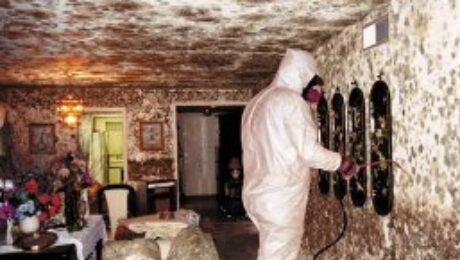
 Dealing with Mold and Mildew in Your Flood Damaged Home
After natural disasters such as hurricanes, tornadoes, and floods, excess moisture and standing water contribute to the growth of mold in homes and other buildings.
Be aware that mold may be present and may be a health risk for your family, if your home has water damage due to:
-
Flooding,
-
Sewage back-up,
-
Plumbing or roof leaks,
-
Damp basements or crawl space,
-
Overflows from sinks or bathtub, or
-
High humidity: steam cooking, dryer vents, humidifiers.
The U.S. Environmental Protection Agency website contains information on mold cleanup and remediation in homes, schools and other large commercial buildings.
The Centers for Disease Control and Prevention website includes general background information about mold health hazards and mold safety recommendations.
- Published in F A Q
How Flooding Hurts Home Values
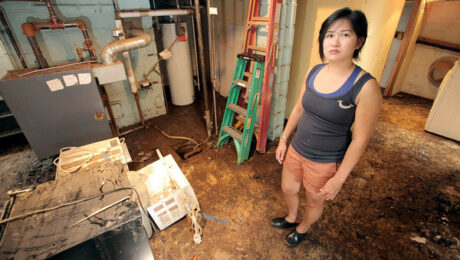
AFTER the shrewd and wary real estate blogger known as Grim (real name: James A. Bednar of njrereport.com) bought his first house last spring, he quickly announced where he would start with renovations: the damp basement.
Showing and telling with pictures on his blog — which up to then had concerned itself only with the vagaries of the market and how to get a deal — Mr. Bednar demonstrated to his hundreds of followers the “right way†to keep a basement dry.
He excavated dirt to eight inches below the foundation, laid down stones and drainpipes, applied flashing and asphalt coating to the foundation walls, insulated them with foam board, and then regraded the property with backfill.
This was three months before Tropical Storm Irene; did we mention Grim is shrewd?
Mr. Bednar’s basement did stay dry — although Wayne, which has many low-lying areas that are federally designated flood plains, was among the hardest-hit communities in the state. President Obama even stopped by Wayne (along with neighboring Paterson) to view the devastation and promise aid in rebuilding.
In the view of some worried brokers and agents, though, rebuilding buyer confidence in a piece of real estate, once it has gotten wet, may be beyond anyone’s powers.
“Anytime there is penetration — even seepage, even if only under extreme circumstances,†said Robert Lindsay, an agent at Coldwell Banker who has been selling houses in Wayne for 35 years, “it will affect property value.â€
In Mr. Lindsay’s view, damage to buyers’ confidence in certain neighborhoods, or in specific houses affected by Irene, might take years to repair. “This is the hottest hot button there is for buyers,†he said. “People do tend to have short memories, but in this case, they figure, if it happens once, it can happen again.â€
Right now, of course, extreme circumstances prevail — and buyers are probably “gun-shy†anyway, as Gary Large, the president-elect of the NJ Association of Realtors, put it. Mr. Large is also the Morris County manager for Prudential New Jersey Real Estate in Morristown.
In many towns in northern New Jersey that have high water tables, homes are generally equipped with sump pumps, and often battery backups, since home inspectors usually recommend them when buyers request a report on a home before purchase.
But sump pumps are not necessarily enough of a confidence booster in today’s climate, said Susan Hunter, the vice president of the Lois Schneider Realtor in Summit. One agent with her company had a closing scheduled for Aug. 30, two days after the storm. During the walk-through inspection, Ms. Hunter said, “the seller mentioned that for the first time in 30 years,†because of Irene, “there had been some minor seepage into one area of the basement.â€
The buyer’s lawyer immediately insisted that money be put in escrow to cover the cost of repairs if the situation worsened.
Post-storm jitters have also been contagious among lenders, Ms. Hunter said. “Many banks are now requiring a ‘final inspection’ by the appraiser to inspect the home for storm damage before closing,†she said in an e-mail.
“We have already had a couple of closings delayed by this process,†she added. “Unfortunately it can cause a domino effect: if one buyer can’t close, the buyer for his house can’t close, and so on and so on.â€
State real estate regulations require sellers to disclose whether a basement has ever been wet or damp, and to complete a disclosure form at the time a house is listed.
If sellers have not told the truth, and the basement floods after closing, “there is a viable potential for damages against the seller,†said Ken Baris, the president of the Jordan Baris agency in West Orange (where there was also widespread basement water damage from the storm).
One of Mr. Baris’s agents, Mary Louie, helped her daughter Frances Louie last year with the purchase of a three-bedroom home in Springfield on a street that lies within a flood plain.
“We knew it was a flood plain, obviously,†the younger Ms. Louie said. “We had to get flood insurance. But there have been a lot of big storms this year, and we never had flooding.â€
Lenders require buyers in areas categorized as flood plains to obtain the insurance, which is available through theFederalEmergency Management Agency. On the Web site, floodsmart.gov, anyone can search whether risk of flooding for a given address is “low to moderate†or “high.â€
“The neighbors said there have been floods,†Ms. Louie said in Irene’s aftermath, “but nothing ever this bad. There is mud all over the walls in our basement.†At that point she was still awaiting the arrival of cleanup workers from the town’s emergency management office.
Several of her neighbors who have paid off their mortgages had let flood insurance lapse — and at one house water had risen almost to the second floor. “I guess they have lost everything,†she said.
Mr. Lindsay recalled clients in the late ’90s who had bought a house near a flood plain, but not in it, who were not required to get flood insurance. That changed in 1999 after Hurricane Floyd, which caused extensive flooding in New Jersey. Federal authorities redrew the map to widen the flood plain and include the property.
“It was a kick in the shins,†Mr. Lindsay said. “Now the owners have to accept both the stigma and the cost, around $25,000 a year.â€
When floodwaters entirely recede this time around, Mr. Lindsay said, he predicts that FEMA will again redraw its maps.
No matter the precautions taken, however, the surprise factor is always there, and Mr. Bednar, for all his hard work, was not exempt. “The basement was bone dry, not a drop of water,†he reported. “The chimney, however, let us down. In our defense, we didn’t get there with the renovations yet.â€
- Published in In the News
NJ Floods Keeps 10,000 Residents From Homes
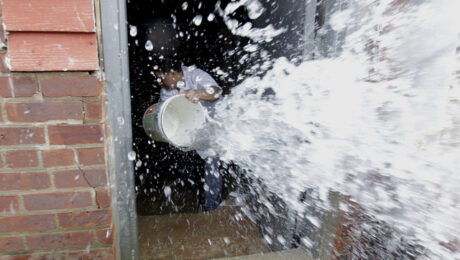
 New Jersey’s northern suburbs remained in Hurricane Irene’s grip, with swollen rivers keeping more than 10,000 people from their homes and utility crews working to restore power to 190,000 customers.
The state, the most densely populated in the U.S., was awaiting word on Governor Chris Christie’s request for a federal disaster declaration. Janet Napolitano, U.S. secretary of Homeland Security, today was scheduled to tour the hardest-hit areas, within 50 miles (80 kilometers) of New York City. President Barack Obama will visit Paterson on Sept. 4, the White House announced today.
“We expect the flooding to start to end today,†Mary J. Goepfert, a spokeswoman for the New Jersey Office of Emergency Management, said in a telephone interview. “Today is going to be challenging, and part of tomorrow. I would not say that everything is going to be all and well by Friday.â€
From the beaches of North Carolina to New York’s Catskill Mountains and the ski resorts of Vermont, Irene blew through the Eastern Seaboard last weekend, killing 45 people, causing losses of about $12.4 billion and leaving 6.69 million homes and businesses without power.
The U.S. National Weather Service posted flood warnings for the New Jersey counties of Morris, Essex, Passaic and Morris through this evening. No rain was forecast for the area.
New Jersey Shelters
Obama today approved disaster applications from North Carolina, where the hurricane made landfall Aug. 27, and New York, where it hit the following morning as a weakened tropical storm. Vermont, which sustained its worst flooding in 75 years, was declared a disaster area yesterday. The designation triggers cleanup and restoration funding from the U.S. Federal Emergency Management Agency.
In New Jersey today, 852 people were in shelters in seven counties, Goepfert said. The evacuees were among 10,107 residents still barred from their homes after 11 inland rivers and their tributaries crested, some at record levels.
Teams were preparing to survey damage near the coast and head north as floodwater recedes, Goepfert said. Municipal workers in beachside towns were repairing boardwalks and restoring dunes in preparation for the long Labor Day holiday weekend, which marks the end of the tourism season.
Fairfield Submerged
In Fairfield, a township of 9,000 about 25 miles northwest of New York City, some areas were 8 feet to 10 feet (3 meters) beneath water that had flowed from the Passaic River, Deputy Police Chief Anthony Manna said. He spoke during a tour with a reporter aboard a 2 1/2-ton military truck, which was submerged to the bumpers. National Guard troops and police officers in boats took some residents from their homes.
Bill Fitzgerald, president of the Fairfield Volunteer Fire Department, said the water measured a mile wide in some places, and carried raw sewage, gasoline and chemicals. Responders dodged barbecue tanks, lawn furniture and lumber, he said.
“The biggest danger we have going on?†Fitzgerald said during an interview at the firehouse. “Pick one: natural gas leaks, electrical lines down, people staying in their homes and water.â€
In New York, 19 of 62 counties will be eligible for aid, according to a release from Governor Andrew Cuomo’s office today, one day after the governor asked Obama for help.
New York Damage
The damage in New York state will be almost $1 billion, with 600 homes wiped out, six towns inundated, 150 major highways damaged and 22 state bridges closed, Cuomo said. He estimated $45 million in agricultural losses on 140,000 acres, a figure that is rising, he said at a press conference in Prattsville, a Catskills town ravaged by torrential rains.
Of the 328,907 customers without power statewide, more than half were on Long Island, Cuomo’s office said. The Long Island Power Authority estimates that 95 percent of its 190,000 customers will have their power restored by Sept. 2 at midnight. In the Catskills, about 17,000 customers don’t have power.
“These are not communities of deep pockets, and these are communities that will need economic help to restore themselves,†Cuomo said at the news conference.
In Vermont, Route 4, a gateway to ski resorts, was severed in a dozen places, state officials said. In and around Killington, 10,000 residents and vacationers were stranded, Town Manager Kathleen Ramsey said yesterday.
In North Carolina, seven counties will be eligible for federal disaster funding. The hurricane destroyed more than 1,100 homes and caused damage of at least $71 million, Governor Bev Perdue said yesterday.
Damage South
“We are estimating right this minute that we’re up to about $70 million worth of damage, simply in things that we’ve eyeballed,†Perdue said yesterday at a news conference. “We know there will be significant add-ons to that number with the debris and the business interests, and obviously you will layer on that agricultural and other kinds of issues. This has become an expensive hurricane for North Carolina.â€
Irene caused losses of about $12.4 billion in the U.S., according to an estimate by Kinetic Analysis Corp., a firm that predicts the effects of disasters. Insurers and reinsurers will probably cover about $4.9 billion of that cost, according to Kinetic.
“This was not a very strong wind event, but it was a very strong water event,†Jan Vermeiren, chief executive officer of Kinetic, said in a telephone interview. Private insurers “rarely offer flood insurance, they only cover damage from wind.
- Published in In the News
Federal assistance to storm-struck communities

PATERSON — President Obama, in his first trip to see the damage wrought by Hurricane Irene, visited flood-ravaged Paterson today and told its hurting yet hopeful residents that federal help was coming despite a brewing battle over funding on Capitol Hill.
“As president of the United States, I want to make it very clear that we are going to meet our federal obligations,” Obama said while standing on a bridge over the swollen Passaic River. “Because we’re one country, and when one part of the country gets affected, whether it’s a tornado in Joplin, Missouri, or a hurricane that affects the eastern seaboard, then we come together as one country and we make sure that everybody gets the help that they need.”
Federal authorities also expanded disaster aid to the entire state today, making every resident and business affected by the storm eligible to apply for federal dollars.
Hurricane Irene caused billions of dollars in damage along the East Coast and led to record flooding in New Jersey after hitting the state last weekend. Paterson, the state’s third-largest city with 145,000 residents and one of its poorest communities, was particularly hard hit when the Passaic River overflowed and forced thousands from their homes.
For Paterson residents, who say their city is often overlooked despite its struggles with poverty and crime like Newark and Camden, Obama’s visit was a sign that someone was paying attention to their woes.

“It will go down in history,” said Charlotte Shepperson, 51, who waited for a glimpse of the president’s motorcade. “Someone cared enough from the White House to come here.”
Obama landed at Newark Liberty International Airport at about noon today and was greeted by Republican Gov. Chris Christie and U.S. Sens. Frank Lautenberg and Robert Menendez (both D-N.J.). Dressed casually in a checkered shirt rolled up at the sleeves, Obama jogged over to a crowd of about 30 people who snapped photos and cheered.
Obama flew by helicopter from Newark to Essex County Airport in Fairfield, then hopped into a motorcade that stopped first on Fayette Avenue in Wayne. The area had been flooded by the Pompton River, and piles of soggy furniture and carpeting lined the street. There were still puddles in some backyards.
Obama, flanked by Christie and other elected officials, shook hands and talked with residents before heading to Paterson. His motorcade of about two dozen vehicles — police cars, black SUVs and an ambulance toward the rear — traveled down Main Street as hundreds cheered.
“It’s very special. I wasn’t going to miss this,” said Cynthia Saunders, 70, who said she staked out her spot on the sidewalk almost five hours before the president arrived.
Obama spoke to reporters on a bridge over the Passaic River connecting Main and Temple streets and then made a final stop at a Lowe’s store on Route 20, where volunteers were providing supplies and food to flood victims.
Although Obama’s visit thrilled many, others were skeptical, knowing that Paterson’s problems go even deeper than the floodwaters did.
“After today, what’s the continuing effort from the mayor, the governor, the congressmen?” said Yemi Bedu, 29.
The 16.4 percent unemployment rate in Paterson is nearly double the state average, and about a quarter of families live below the poverty level — four times the state average.
“People are just making ends meet to begin with,” Rep. Bill Pascrell (D-8th Dist.) said. “And then this catastrophe hits the scene.”
Paterson Mayor Jeffery Jones said the city will be dealing with the fallout from the storm for a long time.
“We are just beginning our journey,” he said. “While the waters have subsided, lives are still in turmoil.”
The president returned to Air Force One after less than three hours in New Jersey. Obama and Christie, who has criticized the president in the past but praised his response to Hurricane Irene, shook hands warmly on the tarmac.
Christie did not make any public statements today, but asked on Friday about Obama’s visit, “Everybody knows I’m a Republican and the president’s a Democrat, but these storms are not Republican or Democratic storms.”
Christie has broken with some of his party in Congress, particularly Rep. Eric Cantor of Virginia, by calling for immediate federal relief rather than insisting that disaster assistance be offset by other cuts in the federal budget. Obama was emphatic that money would be available, and New Jersey’s congressional delegation is gearing up for a fight over funding.
“Now it’s time to take care of New Jerseyans,” Rep. Steve Rothman (D-9th Dist.) said today.
The Federal Emergency Management Agency has less than $800 million available for disaster aid. Lautenberg said he’ll push for $5 billion total for all states hit by the hurricane when lawmakers return to Capitol Hill Tuesday.
Menendez, who also lobbied Obama for funding for a study to mitigate flooding in the Passaic River Basin, said “the president made it clear that we’re going to have the money — period.”
Seth Augenstein, Eunice Lee, Steve Strunsky, James Queally and Bill Wichert contributed to this report. This article also includes a pool report from Herb Jackson of The Record.
- Published in In the News