

Extreme Flooding in York, PA, Harrisburg
Extreme Flooding in York, PA, Harrisburg
Sep 7, 2011; 2:13 PM ET
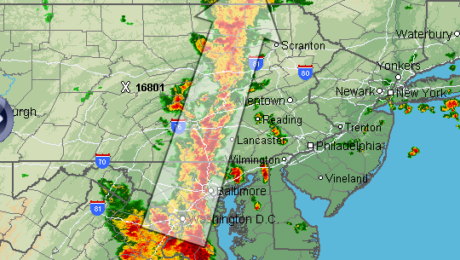
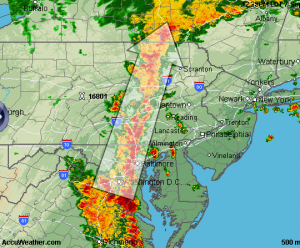
Extreme flooding is occurring today from Washington, D.C. northward through Ellicot City, MD, and York, Harrisburg and Williamsport, PA. The reason is that the same line of storms keeps moving northward and seems never-ending.
I just spent a while on the phone with my girlfriend in York, PA, trying to route her around flood waters. Photos appear below.

A lot of roads there are closed, and traffic tied up, including some major arteries as shown in the screen capture below from PennDOT (click for a live map). At 2:30 PM, they closed all exits between 18 and 21 on I-83 north of York.

A radar estimate map (through this morning only!) is shown below. From actual rain gauges, here are the highlights: The USGS Hershey, PA Gauge reported 6.44″ today, 10.49″ since the weekend. Falmouth, PA: 5.79″ and 9.06″. Watsontown, PA got 7.42″; Bethlehem & Dover, PA have also reported 7″ total on CoCoRAHs. From NWS storm reports, Rockaway, NJ has totalled 8.43″ with 8.11 at Becket, MA and 7.5 at Elma, VA.

And that’s just the short-term flooding. Rivers take longer to rise, and I’m concerned about flooding in Harrisburg, Pennsylvania on Friday. The Susquehanna River is projected to rise from 5 feet yesterday (and 10 feet this morning) to 24.2 feet by the end of the week. Click below to see a live version of this graph:

At this level, it will only be 0.2 feet below the levels achieved during the 2004 flood, which also affected us here in State College. What might the river look like downtown? Check out these flooding photos from 2004, and consider the NWS’s “flood impacts” listed on the page above:
– The residential section of Front and Second Streets in Harrisburg flood at this level. Cameron Street in Harrisburg floods due to backwater from Paxton Creek.
– Evacuations are necessary in the Shipoke area of Harrisburg. The water level reaches the corner of Keller and Front Streets.
US 22/322 in the vicinity of the Dauphin Narrows is impacted by flood waters.
Homes on both banks are affected by high water. This is the approximate level of Routes 11 and 15…upstream of the Market Street Bridge.
A number of homes in West Fairview…Dauphin…and Harrisburg flood.
Basements of residences and businesses on both banks flood. The parking lot on City Island begins to take on water.
The recreation area of City Island is evacuated.
- Published in In the News
N.E. Flood Areas Begin Receding
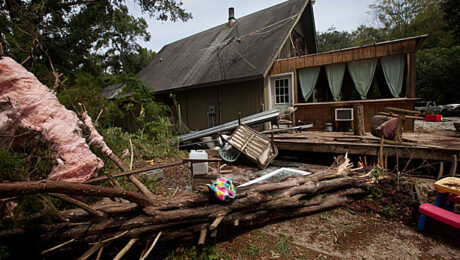
 (BLOOMSBURG, Pa.) — Northern stretches of the swollen Susquehanna River began receding Friday after days of rainfall from the remnants of Tropical Storm Lee flooded communities from Virginia to New York, leading to evacuation orders for nearly 100,000 people.
The damage was concentrated along the Susquehanna in Binghamton, N.Y., in Wilkes-Barre, where more than 70,000 people were told to evacuate, and communities downstream in Maryland. The National Weather Service said the Susquehanna crested above 38 feet Thursday night in Wilkes-Barre — below the top of the levee system and under the levels reached after historic flooding spawned by Hurricane Agnes in 1972. “They did what was right for them, the people down there,” said Tom Vaxmonsky, a resident of West Pittson, just upstream from Wilkes-Barre. “But it’s like everything else, for every action there’s a reaction. And the reaction is that we got a lot more water than we did in ’72 with the Agnes flood.”
As flood waters that inundated the city of Birmingham, which the mayor called the worst in more than 60 years, and surrounding communities began subsiding, the first of the 20,000 evacuees began returning to their homes.
Robert Smith, 35, made it back around noon to his home in a struggling section of Binghamton. Mud and debris covered pavement, and water still blocked streets closest to the river. But he felt inspired by the time he spent in a shelter; when a woman collapsed on the floor there, he said, strangers rushed to tend to her. “Everybody was helping each other out, just total strangers,” he said. “You’ve never seen it before in your life.”
The flooding was fed by days of drenching rains from what had been Tropical Storm Lee, and followed a little more than a week the dousing that Hurricane Irene gave the East Coast. In some areas of Pennsylvania, the rainfall totals hit 9 inches or more, on top of what was already a relatively wet summer.
Authorities in Pennsylvania closed countless roads, including some heavily traveled interstates, and evacuation shelters opened to serve the many displaced people.
The Susquehanna’s crest at Wilkes-Barre had been predicted for Friday, but a broken gauge prevented experts from determining the exact height of the water, weather service hydrologist Dave Ondrejik said.
President Barack Obama declared states of emergency in Pennsylvania and New York early Friday, clearing the way for federal aid.
Damage in parts of New Jersey that were inundated by Irene’s rainfall was less than feared. About 300 residents waited to return home after Lee’s remnants renewed flooding. Three houses were swept off their foundations by a mudslide, but no one was injured.
Rubinkam reported from Wilkes-Barre. Contributing to this report were Associated Press writers Michael Hill in Binghamton; Chris Carola in Albany,
- Published in In the News
Evacuations Due to Flooding
WILKES-BARRE, Pa. –  President Barack Obama formally declared an emergency in Pennsylvania early Friday, adding to a previous declaration covering New York state, authorizing federal agencies to coordinate disaster relief efforts in order to “save lives and to protect property and public health and safety,” according to a White House statement.
The remnants of Tropical Storm Lee poured water on top of the already soaked Northeast on Thursday, closing hundreds of roads and forcing evacuation orders for more than 100,000 people from the Susquehanna River’s worst flooding in nearly 40 years.
 Remnants of Tropical Storm Lee dumps rain in areas struggling to recover from Hurricane Irene
Most of the evacuations were ordered in and around Wilkes-Barre, where the levee system is just high enough to hold back the river if it crests at the predicted level. Even if the levees hold, 800 to 900 unprotected homes were in danger. If they fail, thousands of buildings could be lost.
“This is a scary situation,” said Stephen Bekanich, Luzerne County’s emergency management director. He and other officials were confident the levees would work but sought volunteers to lay sandbags on both sides of the river.
In Hummelstown, another Pennsylvania community along the river, Donna MacLeod had to be rescued from her home.
“I’m heartsick,” she said. “I know I lost two cars and everything that was in my basement and everything that was on the first floor. But I have my life and I have my dog, so that’s good.”
Upriver in Binghamton, N.Y., a city of about 45,000, the Susquehanna coursed into the streets and climbed halfway up lampposts at a downtown plaza. Mayor Matt Ryan said it was the city’s worst flooding since the flood walls were built in the 1930s and `40s.
Road closures effectively sealed Binghamton off to outside traffic as emergency responders scrambled to evacuate holdouts who didn’t heed warnings to leave. Buses and then boats were used to evacuate residents, and National Guard helicopters were on standby.
“It’s going to get worse,” Gov. Andrew Cuomo said, warning people to leave when they get the order.
Up to nine inches of rain fell in parts of Pennsylvania, and a similar amount fell in Binghamton. Rivers and streams passed or approached flood stage from Maryland to Massachusetts, and experts said more flooding was coming.
The storm compounded the misery for some people still trying to bounce back from Hurricane Irene.
Some of the areas hardest hit by the August storm, such as Vermont, avoided the brunt of the latest bad weather. But in Paterson, N.J., where the Passaic River was rising, about 75 people were still in a shelter because of Irene.
“We just finished cleaning up after the flood from Irene,” said Edith Rodriguez, who lived in shelters for three days and spent Wednesday night at a high school outside Schenectady, N.Y., because of Lee. “Now we have to start all over again.”
Commuters and other travelers searched for detours as highways and other roads were flooded out, including sections of New York’s Interstate 88, which follows the Susquehanna’s path. In eastern Pennsylvania, where hundreds of roads were closed, flooding and a rock slide partially closed the Schuylkill Expressway, a major artery into Philadelphia.
Amtrak passenger service on New York’s east-west corridor was canceled, as were classes at many colleges and schools across the Northeast.
At least nine deaths have been blamed on Lee: four in central Pennsylvania, one in Maryland and four others killed when it came ashore on the Gulf Coast last week.
Pennsylvania Gov. Tom Corbett warned of “a public health emergency because sewage treatment plants are underwater and no longer working.”
“Flood water is toxic and polluted,” he said. “If you don’t have to be in it, keep out.”
Up to 75,000 residents in and around Wilkes-Barre were ordered to leave. The mayor told residents to pack food, clothing and medicine and plan for a three-day evacuation.
The river was projected to crest overnight at 40.8 feet — essentially the same height as the levee system and nearly the level it reached in 1972, when Hurricane Agnes caused massive flooding in the area. Luzerne County officials ordered all communities flooded by Agnes to evacuate for the remnants of Lee.
Rose Simko packed up her car and headed to higher ground to stay with family. She was worried about her house, just 150 feet from a levee, but knew she had to leave.
“Everything is replaceable,” she said, “but my life is not.”
Bekanich said several thousand people left their homes, but he did not yet have a complete total. Shelters prepared to handle close to 5,000 people were beginning to fill up, Luzerne County Commissioner Maryanne Petrilla said.
Some 20,000 evacuations were ordered for the Binghamton area, and another 6,000 to 10,000 in Harrisburg, Pennsylvania’s capital. Crews put sandbags around the governor’s mansion, and the first lady moved furnishings from the first floor as the river spilled over its banks.
At the mouth of the Susquehanna, hundreds of residents of Havre de Grace, Md., also were ordered to leave.
In Port Deposit, Md., about 600 people were urged to evacuate as a dam’s flood gates were opened to cope with the heavy rain. By 4 p.m. the town appeared to be nearly empty, but Roger Kerr, grilling some steaks outside his apartment building, said he planned to ride out the flood.
`’I’ve got stuff to watch. I’m on the second floor, 12 feet high. It isn’t going to get that high,” Kerr said.
It is somewhat unusual to have this many evacuation orders for an American flood, though hurricanes such as Irene can force millions from their homes.
Similar-sized evacuations were ordered in the Northeast for floods in 1996 and 2006 and during the remnants of Hurricane Agnes in 1972. About 11,000 people were evacuated from flood-threatened neighborhoods in Minot, N.D., in July.
Forecasters warned that the dispiriting summer soaking wasn’t over and flooding would last four days or more.
“I really feel sorry for people because the sun will be out next week but the water will still be rising in rivers and streams,” said Mark Wysocki of the Northeast Regional Climate Center at Cornell University.
On Thursday, 98 different USGS river and stream monitors registered flood levels in the Northeast. And there are 26 areas that are considered in major flooding. That’s on top of more than 100 locales that set record flood stages from Hurricane Irene.
Tom Graziano, chief of the Hydrologic Services Division at the National Oceanic Atmospheric Administration, said many streams in the Northeast were showing the highest flows ever recorded for the date.
Irene “really primed the pump” in terms of saturating the ground, Graziano said, “and now we’re adding this tremendous amount of rainfall.”
Though the storm was a remnant of Lee, Wysocki also blamed Hurricane Katia, far out in the Atlantic, for the lingering downpour.
He said Katia and a slow-moving high pressure system over Ohio “acted as blockers,” producing a narrow corridor for the storm as it came north.
- Published in In the News
Why work with a Public Adjuster?

 Public Adjusters can get you 2-5 times more money on your property damage!
WHY Independent Insurance Agents should consider working with a Public Adjuster to handle and resolve home owners and business insurance damage claims. Insurance agents need to realize that Public Insurance Adjusters are not your enemy. If you help your customer pick a claims professional who understands YOUR insurance claims business, adheres to a Professional Code of Ethics and has an excellent reputation, you will have done a great service for them. Here are guidelines for how to pick a good Public Adjuster: – They should be licensed in the state the loss occurs in – A member of the National Association of Public Insurance Adjusters (NAPIA) – Experienced with a range of disasters and has worked with many insurance companies – Local knowledge of contractors, repair and remediation prices, building codes, etc.
Public Insurance Adjusters Are Not Your Enemy
An Interview with Ronald R. Reitz, CPPA – Quality Claims Management, San Diego, CA
We recently spent an afternoon with Ron Reitz, CEO of Quality Claims Management and Past President of the California Association of Public Insurance Adjusters as well as an Officer of the National Association of Public Insurance Adjusters (He will be President in 2012) . Ron is a Certified Professional Public Adjuster with over 15 years of experience providing hazard claim recovery services to investors, mortgage servicers, homeowners and businesses.
1. After a disaster, insureds have hundreds or even thousands of questions and worries. In a large-scale disaster, many of your local customers will be coming to YOU for answers. You may find yourself answering the phone every few minutes to address more questions and to resolve their fears. As an agent you will find it necessary to read the policy and then get back to the insured with their answers. You may find yourself at odds with the insurer if you add your own opinion or interpretation of the policy language and it differs from the insurer’s. This is an area where a public adjuster can add value since they will be the ones working directly with the insured and the insurer to address all coverage issues.
2. Customers who have suffered a loss are very emotional and upset. You will likely be the first one to receive a call informing you of their loss. Your customer will be in need of some immediate assistance and resources. Some of the things they will need are emergency services and temporary housing. Customers will also ask you to report their claim for them and will inquire as to the entire process. It is likely they will ask for a copy of their policy with a full explanation of their coverages. This is an important process that can be handled by a public insurance adjuster.
3. For the insured who experiences a disaster, working with numerous company adjusters, independent adjusters and contractors can be cumbersome, time-consuming and sometimes may even be infuriating. However, you as an independent agent want to stay neutral – you don’t want your customers yelling at you for decisions the insurer may be making and you certainly do not want your insurance company clients upset with you either. This can be a very challenging position to find yourself in. This is another reason why it makes sense to engage a public insurance adjuster – they are outside of the decision making process and will be an advocate for the insured.
4. Our experience in adjusting large losses and large scale disasters has shown there are a large number of insureds that are under-insured. This is usually the result of the insured shopping for the lowest rates and ending up with inadequate coverage limits. If your insured finds themselves under-insured, the natural thing for them to do is to point their finger at their agent and accuse them of not properly insuring them. Sometimes, a very skilled and astute public adjuster can find additional coverage within the policy to minimize the impact. When selling a policy I recommend the agent spend additional time with the insured to fully explain the coverages that may quickly reach or exceed limits in case of a large loss – such as personal property with the sub-limits; additional structures; landscaping; and building code upgrade to name a few. A good public adjuster will look for all coverages within the policy with a goal of minimizing the effect of an under-insured situation.
5. During the entire claim process it is common for the insurer and insured to have differing opinions on a variety of issues. A professional public insurance adjuster will relieve the burden from the agent by answering and explaining coverages, processes, values and options available to them. In addition, the public adjuster will be able to obtain a value of the loss that is independent from the insurer’s. The goal of the public insurance adjuster is to pursue all coverage the insured is entitled to under the policy. Our experience has shown this is not always the same goal the insurer has. A professional public insurance adjuster can be a strong advocate for the insured and will work with the agent, insured and the insurer to resolve the claim expeditiously for its full value.
[footer1]6. Remember a professional public insurance adjuster is the only adjuster that can represent the insured. The company adjuster and independent adjuster are only authorized to work for the insurer. If the customer does not engage a public insurance adjuster, then they will find themselves without their own representation – or will rely upon their agent to perform that work and you will quickly discover you have a second full-time job. It is an arduous and tenacious task to juggle all elements of a claim and one that should really be performed by someone that does this on a full-time basis.
If you help your customer pick a claims professional who understands the insurance claims business, adheres to a Professional Code of Ethics and has an excellent reputation, you will have done a great service for them.
Guidelines for How to Pick the Right Public Adjuster:
– They should be licensed in the state the loss occurs in
– A member of the National Association of Public Insurance Adjusters (NAPIA)
– Experienced with a range of disasters and has worked with many insurance companies
– Local knowledge of contractors, repair and remediation prices, building codes, etc.
– Knowledge of your insurance company – its top adjusters and claims handling processes and policies
– References from satisfied customers
- Published in Blog, F A Q, In the News
5.8-Magnitude Quake Strikes East Coast
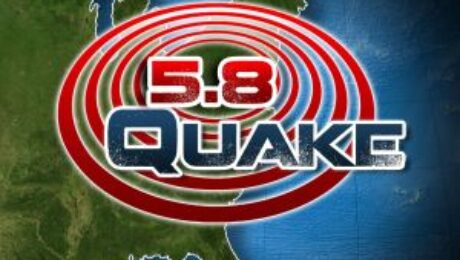
 Of all the things there are to worry about, earthquakes are fairly low on the list for those on the East Coast. So it was startling, just as the lunch hour was ending Tuesday and workers in a broad area of North America were settling back into their cubicles, when floors began to shake and chairs rocked.
In Clemson, S.C., water sloshed in glasses. In Washington, chandeliers swayed in the Capitol. And in the tiny town of Mineral, Va., china cabinets exploded.
An unusual earthquake centered near Mineral startled millions of people from Maine to Georgia on Tuesday. In the end there were few reports of serious damage, with more rattling of nerves than of property.
But the tremors disrupted life in some of the nation’s biggest population centers. Tens of thousands of people were evacuated from office buildings. The quake strangled cellphone service, interfered with air traffic, halted trains, jammed roadways and gave some on the West Coast an opportunity to poke fun at Easterners who seemed panicked and uncertain of how to respond. In earthquake-prone areas, people usually are instructed to stay inside to avoid falling debris, but in a post-Sept. 11 world, few argued with evacuation commands.
The United States Geological Survey said the quake struck at 1:51 p.m. It preliminarily measured 5.8 and lasted 20 to 30 seconds. Survey officials reported two small aftershocks, of magnitude 2.8 and 2.2, within 90 minutes of the original jolt. Seismologists, suggesting little cause for further alarm, said the initial quake erupted from an old fault, which, unlike the San Andreas fault in California, normally produces much weaker quakes.
This quake was notable for its incongruity: it was one of the most powerful to hit the East Coast in decades, and yet it caused little damage. Reports of tremors came from as far north as Sudbury, Ontario, where government offices were closed, and as far south as Alabama.
Thousands of people in Midtown Manhattan were evacuated from their offices and found themselves suddenly sprung on a sunny summer afternoon. Farther downtown, police officers ordered the evacuation of City Hall, sending Mayor Michael R. Bloomberg and his staff scurrying out of the building.
But for all the disruptions and the fleeing of buildings, the quake was, for most people, a curious interruption before life quickly returned to normal, providing fodder that lighted up social media sites. “Felt a litle wobble here is Astoria, but none of my Scotch fell off the shelf,†a man who identified himself as William Schroeder posted on an Nytimes.com message board.
Others were more shaken. “I ran outdoors and found my neighbor calling a friend in Virginia who also felt the profound quake,†Bill Parks of Hummelstown, Pa., said in an e-mail. “This quake was like none I ever experienced in the East in my life and I am 76 years old.â€
In Washington, the quake led to the quick evacuations of the White House, the Capitol and monuments across the Mall. Air-control towers across the region were evacuated, putting some planes in a temporary hold pattern and diverting some to Boston. Amtrak stopped its trains. The Federal Emergency Management Administration asked the public to refrain from talking on cellphones and to use e-mail and text messages instead in an effort to relieve the congestion.
The epicenter in Mineral is about 84 miles southwest of Washington, and a few miles from a nuclear power plant. Dominion Virginia Power, which owns the plant, said that its units tripped off line automatically as planned and that no damage to the plant had been reported.
Perhaps the most trauma occurred in Mineral itself. The quake stopped everything for hours. Schools closed. Coffee shops shut down. At the Food Lion, on the outskirts of town, managers shooed reporters away but not before one employee said: “The whole floor was going up and down. It was crazy in there.â€
Ben Pirolli, 68, who co-owns Main Street Plumbing and Electrical, said he was in the bathroom when the quake hit.
“I was mopping the floor and the next thing you know, everything is falling in on me,†Mr. Pirolli said. “I thought the world was coming to an end.â€
Geologists said that the region had frequent earthquakes but that they were usually so small that they were hardly noticed. This one was 3.7 miles deep, bigger than is typical, and produced a rumbling that grabbed the attention of millions of people hundreds of miles away from the epicenter.
- Published in F A Q
Hurricane Irene: Prepare for a Category 4 ‘major hurricane’
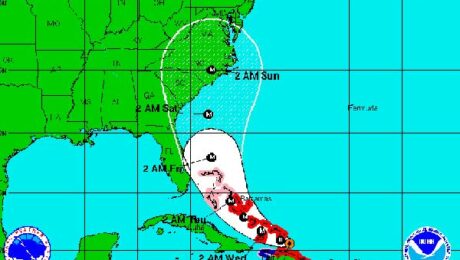
Hurricane Irene continues to grow in strength and ferocity and is now on track to become a Category 4 hurricane, authorities said. Fueled by warm waters and nothing to slow it down, the hurricane is taking a path that will likely skirt Florida and head straight for the Carolinas, with landfall this weekend.
The National Hurricane Center warns that the storm remains unpredictable and is urging East Coast residents to closely track the first major hurricane of the 2011 season as it heads toward the United States so that they can be prepared for impact.
The storm, which is now a Category 2 hurricane, is moving at about 12 mph and is currently north of the Dominican Republic, said National Hurricane Center spokesman Dennis Feltgen in an interview with The Times. Unfortunately, that means “it’s moving into an environment which is very ideal for strengthening. … We expect it to become a Category 4 hurricane as it passes east of central Florida.”
The warm ocean waters and very low wind shear are the two key factors driving the hurricane, he said. High wind shear could help disrupt the storm, scattering it.
“We expect the storm to stay off the coast of Florida, which is good news for Florida. But it’s still looking like it’s going to impact the Carolinas and could make landfall there as a major hurricane.”
- Published in In the News
Hurricane Irene: Bahamas, U.S. Threat
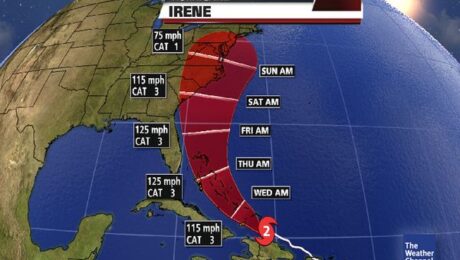
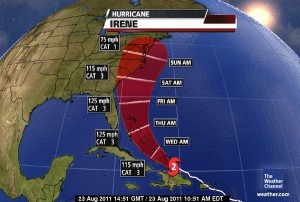 Hurricane Irene, the first hurricane of the 2011 Atlantic hurricane season, now has its sights set on the Bahamas and the U.S. East Coast.
Irene produced widespread tree and power line damage across Puerto Rico Sunday night into Monday. View Photos
As you can see on our projected path map below, Irene is forecast to strengthen into a major hurricane (Category 3 or higher on Saffir-Simpson hurricane wind scale) by early Wednesday as it tracks in the direction of the Bahamas on a path towards the East Coast of the U.S. Friday into the weekend.
Interactive map: Hurricane Irene interactive projected path
TWC’s Exclusive Threat Level for Hurricane Irene
Find out the potential impacts from Hurricane Irene in the Caribbean, Bahamas and the U.S. on The Weather Channel’s exclusive threat level graphics below.
-
We have increased the threat level in portions of the central and northern Bahamas to extreme. Hurricane Irene will track from the southern Bahamas to the northern Bahamas Tuesday through early Friday morning. This is a potentially very dangerous situation and preparations should be rushed to completion.
-
Coastal portions of the Southeast U.S. remain in a high threat (red shading). This threat level will likely change as forecast confidence increases both in the track and intensity.
-
The greatest probability of a U.S. landfall is in the Carolinas during the Friday night through Saturday time frame, possibly as a major hurricane.
-
Keep in mind, the average forecast track errors 4-5 days out are between 200 and 250 miles! NHC intensity forecasts even in the 1-2 day range are regularly off by one Saffir-Simpson category!
-
The second threat level graphic below shows that we expect Hurricane Irene to continue northward either along or inland over the Northeast U.S.
-
The threat level in Northeast U.S. is low to medium for now and will likely change depending on the exact track and intensity of Irene.
-
Timing for any potential Northeast U.S. impacts would be this weekend into perhaps Monday of next week.
-
As always, stay tuned to The Weather Channel and weather.com for the latest updates on this situation. Tune in at :50 after each hour for a full look at the tropics.
Civil Remedy Notice

A Notice of Development of Rule making
DEPARTMENT OF FINANCIAL SERVICES
Divison of Consumer Services
RULE NO: RULE TITLE 69J-123.002: Procedures
PURPOSE AND EFFECT: The proposed rule adopts a new electronic form for filing a notice of intent to file a civil remedy action as provided in Section 642.155, F.S.
SUBJECT AREA TO BE ADDRESSED: The Department seeks input from those who will be using the new form or who will otherwise be affected by the rule as to how the rule can best meet their needs.
SPECIFIC AUTHORITY: 624.308(1) FS.
LAW IMPLEMENTED: 624.307, 624.155(3)(b) FS.
IF REQUESTED IN WRITING AND NOT DEEMED UNNECESSARY BY THE AGENCY HEAD, A RULE DEVELOPMENT WORKSHOP WILL BE HELD AT THE DATE, TIME AND PLACE SHOWN BELOW:
TIME AND DATE: Tuesday, January 22, 2008, 10:00 a.m.
PLACE: 143 Larson Building, 200 East Gaines Street, Tallahassee, Florida
Pursuant to the provisions of the Americans with Disabilities Act, any person requiring special accommodations to participate in this workshop/meeting is asked to advise the agency at least 5 days before the workshop/meeting by contacting: Greg Thomas, (850)413-3130. If you are hearing or speech impaired, please contact the agency using the Florida Relay Service, 1(800)955-8771 (TDD) or 1(800)955-8770 (Voice).
THE PERSON TO BE CONTACTED REGARDING THE PROPOSED RULE DEVELOPMENT AND A COPY OF THE PRELIMINARY DRAFT, IF AVAILABLE, IS: Greg Thomas, Chief of Education, Advocacy & Research, Division of Consumer Services, Department of Financial Services, 200 East Gaines Street, Tallahassee, FL 32399-0320; (850)413-3130
THE PRELIMINARY TEXT OF THE PROPOSED RULE DEVELOPMENT IS:
69J-123.002 Procedure.
The civil remedy notice required by Section 624.155, F.S., shall be electronically submitted on Form DFS-I0-363, “Civil Remedy Notice of Insurer Violation,†(Effective:____), which is hereby adopted and incorporated by reference. The form shall be submitted to the Department of Financial Services, Bureau of Consumer Assistance, through the website at https://apps.fldfs.com/civilremedy.
No fee is required.
Specific Authority 624.308(1) FS. Law Implemented 624.307, 624.155(3)(b) FS. History–New
- Published in F A Q
Property Damage
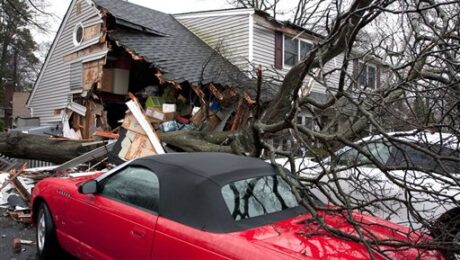
When disaster strikes and your property is lost or damaged, you need someone who is on your side.
The insurance companies have experienced adjusters working for them…
Shouldn’t you have a public adjuster working for you?
- Published in Slider
Get Help Filing Your Insurance Claim
If you are the victim of a disaster, the sooner you can get help with your insurance claim the better. A public adjuster is just the person to get you the aid you need. Sure, you could submit an insurance claim on your own, but someone on your side your ultimate settlement could fall short. Make sure you cover your bases by getting insurance claim help from the start.
A licensed public adjuster has a different focus than the insurance company adjuster sent to help with your insurance claim. The insurance adjuster wants to be of assistance but also wants to limit company losses. Additionally, many adjusters arrive from out of state and simply do not understand the extent of building customs, costs, and codes per your state. After a major hurricane or flood or any other major property damage, insurance adjusters are also overextended. Do you want an insurance company representative who doesn’t know your states construction industry and is overworked to help you with your insurance claim or would you prefer a professional who is dedicated to making sure you get everything you are entitled to under your policy?
A licensed public adjuster offers insurance claim support that is uncompromised. These professionals understand both the insurance claims process as well as your state construction industry. From meticulous and accurate estimates to strong negotiation skills, having a licensed public adjuster on your side makes certain that your final settlement offer will cover all of your covered losses.
,p>
For instance, if you live in Florida and need insurance claim catastrophe assistance, one of the first people you should call is a licensed public adjuster. Not only will you get help filing the claim and dealing with the paperwork, but you will also have a professional who understands your policy. Your public adjuster will examine your insurance policy to find out exactly what is covered under it. He will also thoroughly survey the damage to your home or Florida business. The insurance claim help doesn’t stop there. Detailed documentation and accurate estimates are part of the package along with negotiations with your insurer.
Getting insurance claim help doesn’t cost you a penny upfront. Instead, you will pay a percentage of the total settlement after your licensed public adjuster has negotiated a better settlement offer with your insurance company. This allows you to get the help you need with your insurance claim without the financial burden and stress your property damage has already caused you. In addition, your settlement check should be dramatically higher when you have a professional, licensed, public adjuster helping with the insurance claim.
When disaster strikes many people don’t know where to turn when they need help claiming insurance losses. You don’t have to go through the process alone or simply rely on the estimates your insurance company provides you. Instead, you can get immediate assistance along with a professional with your best interests as their number one priority.
Depending on the scope of your insurance claim, piles of paperwork will arrive. With a licensed public adjuster’s help, the burden is shifted from your shoulders to theirs. Public adjusters know exactly which forms to fill out and how to complete them accurately. Because of this support, your insurance claim will go smoother with fewer postponements.
Are you aware of how to document your losses? When filing an insurance claim in, it helps to know exactly what’s been lost. A licensed public insurance adjuster will go through your property, surveying and documenting all damage both to the buildings as well as to the contents. With this detailed help, you can expect an equitable insurance claim settlement offer and peace of mind.
- Published in F A Q