

State Farm Faces Criminal Investigation over Hurricane Claims
 Tim Boyle/Getty Images(NEW YORK) — State Farm Insurance, the nation’s largest home insurer, faces a new criminal investigation in Texas related to how it handled potentially tens of thousands of hurricane claims there, ABC News has learned exclusively.
Gregg Cox, who leads the public integrity unit of the Travis County District Attorney’s office in Austin, confirmed to ABC News that his investigators recently launched the probe after reviewing newly released communications from top State Farm managers in Texas. Some of the same communications have led to lawsuits by customers who say they were defrauded by State Farm Lloyds, the Texas subsidiary of the larger insurance company.
The documents in question relate to an alleged cover-up by State Farm management related to its denial of consumer insurance claims for a common type of roof damage that occurs during high wind events and hurricanes.
Jim Warner, a longtime homeowner in Missouri City, Texas, had been a customer of State Farm Insurance for more than 20 years before finding himself in the center of the now brewing criminal investigation. He says he had never filed an insurance claim until Hurricane Ike in 2008 and had always paid his monthly bills to State Farm on time.
However, Warner filed suit against State Farm after he says the company did not follow through on its slogan that promises, “Like a good neighbor, State Farm is there.” Warner always believed his policy would cover all types of damage to his roof, but when he went to file a claim he says he was shocked to learn that was not the case.
Warner’s lawsuit alleges that State Farm documents establish a clear internal policy of intentionally denying consumer claims for roof damage similar to what Warner experienced. Warner’s attorney, Steve Mostyn, claims the systematic denial of those types of claims may have quietly saved State Farm close to $1 billion.
Mostyn says State Farm documents obtained in the lawsuit reveal an attempt by managers to hide the company’s policy of non-payment from state insurance regulators.
“They absolutely went through an effort to cover it up,” Mostyn said. “These emails are coming from the top. They’re setting policy. And that policy by their own admission … shows conclusively they have not paid thousands of people.”
In Warner’s case, his problems began after he says the high winds of Hurricane Ike caused the shingles on his roof to become “lifted.” Those winds, Warner alleges in his suit, broke the seal under Warner’s shingles that normally create a water-tight barrier. Warner says an independent adjuster he hired agreed the damage was extensive and recommended Warner’s roof be replaced.
Warner alleges, however, State Farm repeatedly refused to admit the unsealed tabs were damage that should be paid under the policy. So Warner filed a consumer complaint with the Texas Department of Insurance, hoping the regulator could help. However, Warner’s lawsuit says it was during that very investigation of his complaint to insurance regulators that State Farm began to cover up its practices of refusing to pay for this kind of damage.
ABC News reviewed documents obtained in the lawsuit including an initial draft of State Farm’s response to insurance regulators about Warner’s complaint. In that draft letter, State Farm clearly disclosed how the company did not pay for insurance claims related to broken seals on roofs, saying, “Regarding the detached seals, there is no coverage as this condition is not considered… physical loss.”
However, when the “catastrophe section manager” for State Farm saw that statement written out, he directed it be removed from what state regulators would be told, instructing, “This letter needs to be revised to delete the reference to unseal tab.”
The reference was subsequently removed, and that same catastrophe manager then forwarded the newly revised letter to other unnamed colleagues at State Farm “for your review” before it was sent off to the state.
Attorney Mostyn says State Farm fought hard to keep from having to disclose those and other documents, but lost the fight. He says other documents show the insurer attempting to delete other references to the company’s policy of not paying lifted-shingles claims.
Warner’s lawsuit alleges that nearly 100,000 people may have had their claims for similar problems wrongly denied, estimating that many additional consumers who did not hire independent investigators to inspect their roofs may be unaware they are actually damaged today and susceptible to problems in future windstorms.
ABC News has confirmed grand jury subpoenas have been served to State Farm.
“We have requested a large amount of information from them, and they are complying with our requests,” said Cox.
State Farm declined an interview request for this story. However, the insurer said in a statement that, “State Farm Lloyds is cooperating fully with the Travis County investigation and has successfully settled the majority of civil litigation involving Hurricane Ike claims. To date, we have paid policyholders more than $1.5 billion dollars, much of which went to repair or replace roofs. We have been actively working to resolve questions related to roofing shingle claims. We will continue these efforts to maintain the trust of Texas homeowners, of which more than one in six has placed their confidence in State Farm Lloyd’s to protect their homes.”
State Farm Lloyds says it will soon file papers with the court disputing the claims made in Warner’s recently amended lawsuit.
- Published in In the News
7 Tips to Preparing Your Florida Coastal Condominium for the Hurricane Season
7 Tips to Preparing Your Florida Coastal Condominium for the Hurricane Season and the specific steps to take to
FOR IMMEDIATE RELEASE / PRURGENT
7 Tips to Preparing Your Florida Coastal Condominium for the  Hurricane Season”, a free report, has just been released by Florida condominium construction expert Robert Fitzpatrick, P.E.
The  Hurricane season is just starting and predictions indicate it could be a rough one. You need to start getting ready now. Prepare for two things; water coming in and power going out. Here are some things to check.
1. If You Have Hurricane Shutters
– Check the anchorage (screws into the walls, ceiling or floor). Make sure they are tight and there is no rattle. Shutters that blow off won’t protect you and one of the biggest causes of shutter failure is insufficient or improper anchorage. They should be anchored in reinforced masonry that has grouted cells or into reinforced concrete or wood. If anchors are loose or rattle, they can fail from the buffeting winds. Shutters should not be attached to Exterior Insulated Finish System (EIFS) (synthetic stucco on light gage steel studs). If the shutters or the anchors rattle or appear loose, call the shutter company and have them install the next larger diameter size or back them out and epoxy them back in.
– When you are comfortable with the shutter anchorage, make sure the shutters open and close properly and that the weather stripping or gaskets are still pliable and resilient. Deteriorated gaskets will rub off on your fingers when they should be replaced. They shouldn’t be cracked. If the shutters do not open and close well, try WD 40 or Silicone garage door opener spray on the hinges and then open and close them a few times to get the oil worked around all the hinges. If the shutters aren’t working up to par, or the gaskets are worn, call a shutter company to have them checked and serviced.
2. If You Don’t Have Hurricane Shutters
– Get buckets and towels staged by the sliding glass doors to soak up the water that will come in. You can stuff beach towels in the sliding glass door tracks to absorb water as it enters and then squeeze the water into buckets. This is a family operation. One person removes the wet towels and gives to the squeezer and puts in dry towels. The squeezer squeezes the water into the buckets. The bucket crew transports the bucket to the toilette and brings back empty buckets and someone else is drying towels in the dryer. Everyone hopes that this doesn’t have to go on all night.
– There is product called the “water dog†or something like that. It’s a cylindrical foam tube in a stocking that is made to help seal the sliding glass door when wedged in the door track between the threshold riser (or back dam) and the door panel. Reports have it they are somewhat effective in reducing (not eliminating) water penetration.
– Next year, get shutters or check out sliding glass doors that have a very low air infiltration rate. This helps lower the risk of water penetration.
3. Furniture and Electronics
– If water could damage it, get your stuff off the floor. Raise it on some blocks a few inches. If you have carpet, you can leave it on the floor to soak up the water as it comes in or peel it back in a futile attempt to save it and try to mop up the water as it comes in. You will need more bucket carriers and you will lose. Mother Nature almost always wins.
4. Exterior Wall Joints
– Check around all the exterior wall penetrations, ie; wall mounted light fixtures, dryer vents, electrical outlets, TV cable cords, rain gutter attachments and, of course, windows and sliding glass doors. If these areas do not have a continuous bead of sealant around the perimeter, buy some exterior waterproofing sealant in a tube, cut the tube so you have a nozzle opening of a 1/4†diameter or a little larger, and apply a continuous bead of sealant around the perimeter of the fixture to the wall. Wipe the fixture and the wall first with a wet rag to clean the surface, let it dry, then seal.
– If it is caulked, see if the sealant around these items is still adhered. If you can peel the sealant off the wall, pull it completely off and re-caulk. When you caulk, try to get about ¼ inch of caulk on each surface.
5. Balcony or Patio
– Patio chairs and tables should be folded up and brought inside. Potted plants should be brought in. Shade umbrellas should also be taken down. During a hurricane, most damage is caused by wind-borne debris. Check TV satellite dishes to make sure they are rigidly secured
6. EIFS Skinned Buildings (synthetic stucco on metals studs)
– If you live in an EIFS skinned building (synthetic stucco on metals studs), evacuate and take any valuables with you. No kidding. Imagine your Unit with exterior walls blown off. Does this sound a little alarmist? Most of the EIFS cladding products were not intended for areas where wind pressures exceed 35 pounds per square foot. In a hurricane, you could get double that. Play safe, evacuate if you live in an EIFS clad condominium.
7. Finally, stock up on flashlights and batteries so you can check to see any water or structural damage.
- Published in Blog
All pain, no gain for Citizens insurance customers
Paying more and getting less is the new motto for homeowners stuck with state-run Citizens Property Insurance. Old and new customers alike are getting socked with rate hikes, higher deductibles, more exclusions…and no place else to turn for hurricane coverage.
“I was just so happy to get a renewal notice and not a cancellation notice, I didn’t really pay attention to the other stuff,” said Ira Goldstein, 55, of Delray Beach.
Goldstein’s private insurer dropped him in 2010, when his home developed problems with Chinese drywall. In two years with the state-run insurer of last resort, Goldstein’s premium has jumped from $1,667 to $2,106, a 26 percent increase.
Meantime, Citizens no longer covers things like sheds, pools and screened-in porches.
Higher rates and diluted coverage are going to be recurring themes in coming years for Citizens policyholders, as company executives and state politicians try to shrink the customer base from its current 1.45 million. Citizens, which had only 1 million policies a few years ago, keeps growing as private insurers flee the state or go bankrupt.
The problem: Citizens is a virtual monopoly in many areas, including large swaths of South Florida, so there is no consumer choice. For many of the 337,000 Citizens customers in Broward and Palm Beach counties (myself included), there is no private insurance alternative. And if private insurers won’t come back until rates are allowed to climb to the stratosphere and Citizens bleeds us dry getting there, then a competitive market seems pretty meaningless.
When longtime Fort Lauderdale resident Sherry Friedlander got her Citizens policy renewal earlier this year, she balked at the $4,000 windstorm premium and $38,000 deductible.
“It means I have to pay $42,000 out of pocket before I see one dime after a storm,” said Friedlander, who lives east of Federal Highway. “I called my agent and asked who else is writing hurricane policies. He said, ‘Nobody.’
So she did something dramatic. She dropped her windstorm policy.
“A lot of my neighbors have done the same thing,” Friedlander said. “I’m not happy about it.”
Because she owns her home outright and doesn’t have a mortgage, she has the option of “going naked” when it comes to property insurance. But homeowners with mortgages are required to carry insurance by their lenders. If homeowners can’t find insurance on their own, exorbitant “lender-placed” insurance is imposed.
Property insurance rates might not be high enough to be “actuarially sound” for private insurers spooked by Hurricane Andrew and the freak 2004-2005 storm years, but they’re plenty high enough for homeowners battered by the housing meltdown, flat wages and high unemployment.
Digging through my own records was an eye-opener. When I bought my older home in Dania Beach in 2000, I paid a total of $1,493 for separate windstorm, fire/theft and flood insurance policies. With my latest policy renewals, including a 10 percent increase from Citizens, I’ll be paying just over $5,000 for property insurance this year.
I can only wonder, how much more actuarially sound can things get before we all go broke?
- Published in Blog
Fed flood insurance program gets 60-day extension

 Congress has given itself two more months to come up with long-term solutions for the debt-burdened federal program that provides insurance for homes and businesses in areas subject to flooding.
A voice vote in the House Wednesday extended the life of the National Flood Insurance Program for 60 days, assuring that people in flood-risk areas will continue to have access to the flood insurance they need to close on mortgages or obtain refinancing. The program is slated to expire Thursday.
The last full-scale re-authorization of the NFIP, a wing of the Federal Emergency Management Agency, occurred in 2004. Since 2008 the insurance provider has stayed alive through a series of 16 short-term extensions while lawmakers debate how to restore its fiscal soundness.
The NFIP was largely self-financing until it was overwhelmed by claims from hurricanes Katrina and Rita in 2005. It now owes nearly $18 billion to the Treasury.
Rep. Judy Biggert, R-Ill., chair of the House Financial Services subcommittee on insurance, said she hoped Wednesday’s 17th stopgap measure would be the last, “because this program is too important to let lapse, and too in-debt to continue without reform.”
She said Senate leaders had given public and private assurances that they would vote on a long-term extension in June.
The House last year passed a five-year extension that allowed for increased premiums and ended some subsidies, but the Senate has been unable to get a companion bill to the floor for a vote.
The Senate last week passed the 60-day extension after adding a provision by Sen. Tom Coburn, R-Okla., that would gradually eliminate premium rate subsidies for people buying second homes and vacation homes in flood-prone areas. Coburn said that could save the program $2.7 billion over 10 years.
The NFIP was created in 1969, partly to fill the gap left by the unwillingness of private insurers to provide flood insurance. It now covers some 5.6 million policyholders in 21,000 flood-prone communities
- Published in In the News
How changes to flood insurance program could affect you

 WASHINGTON — Florida’s battered housing market will get some temporary relief if the U.S. House, as expected, approves a 60-day extension today of the National Flood Insurance Program before it expires on Thursday.
But Congress is also considering broader changes that will raise rates and phase out coverage for some businesses and homeowners, especially for second homes or vacation houses. Here’s how today’s action and a revamp would impact the state:
Q: How will home sales be affected by this extension?
A: Flood insurance is essential to complete home purchases in much of low-lying Florida. You can’t get a federally backed mortgage in flood plains and some waterfront areas without coverage. The flood program has lapsed or brushed against an expiration date several times in recent years, complicating and sometimes delaying real estate closings that come around the same time.
“The first time, it caught everybody by surprise. But the industry has learned to be pro-active. I just have my clients go out and buy insurance now, even if they don’t close for another week or 10 days,” said Charles Kiesel, a mortgage lender in Cooper City. “We’ve learned how dumb our government is, how it runs right up to the deadline.”
The Senate approved a 60-day extension last week, and Republicans and Democrats agreed to debate a more substantial bill in June that would overhaul the program and continue it for five years. However, the 60-day extension comes with one significant change: subsidized coverage for second homes or vacation homes will be phased out over four years, raising rates for those who buy them.
Q: How much more will that cost buyers?
A: The cost of flood coverage varies widely, but the average is about $570 a year. Subsidized rates apply to about 20 percent of those covered and to houses built before flood-zone maps were issued in the mid-1970s. Subsidies cover up to 65 percent of the premium.
So phasing out subsidies will add to the cost of buying vacation homes, but probably not enough to discourage many buyers. Kiesel said, “Somebody buying a house for half a million dollars in Florida isn’t going to worry too much about paying another $40 or $50 a month for flood insurance.”
Q: What kind of changes will come if Congress passes the five-year bill?
A: The House bill, passed last year, differs from the Senate’s version to be considered in June, but both would phase out subsidized coverage for commercial buildings and homes that have been frequently flooded.
Rates would be set more in line with the risk of flooding. The legislation would allow the Federal Emergency Management Agency to buy “re-insurance” from private companies to back up the program. And it would allow the agency to explore selling “catastrophe bonds” to set up a reserve fund to cover the cost of massive disasters.
Q: Will that hike premiums?
A: Premiums already are due to go up by 5 percent this fall and may gradually increase by as much as 20 percent in higher-risk areas. Phasing out subsidies would mean even higher costs for affected businesses and homeowners.
“For those currently paying subsidized rates, eventually you might pay about double the amount,” said R.J. Lehmann, an insurance expert at The Heartland institute, a free-market think tank in Washington.
Q: What’s the hang-up in Congress?
A: The big issue is the program’s $18 billion debt, with no way to pay it back. The program hemorrhaged money after a batch of storms struck Florida and other Gulf Coast states in 2004 and 2005, culminating in Hurricane Katrina.
Some in Congress want to cancel the debt, but many others call that irresponsible and say the program must at least pay its ongoing costs based on actuarial risk, much like private insurance.
“If we were to have a sound and financially stable program, it has to be able pay big claims without going back to the treasury,” Lehmann said.
Q: Who is pushing to save the program, and who wants to change it?
A: A leading critic is Sen. Tom Coburn, R-Okla., who threatened to block the 60-day extension unless it included a provision to end subsidized coverage of vacation homes. Many Republicans in Congress say the program distorts the housing and insurance markets, and some environmental groups say it encourages damaging development in flood-prone places.
But most Florida members are struggling to preserve it, knowing that Floridians hold 2.1 million of the nation’s 5.6 million policies. Sen. Bill Nelson, D-Fla., who faces a tough re-election campaign, has been especially eager to renew it.
“Sen. Coburn was going to hold up a short-term extension of the entire flood-insurance program unless he got changes to second-home coverage,” said Nelson spokesman Dan McLaughlin. Within 60 days, he said, “we’ll be debating a long-term plan and address any needed changes then.”
- Published in In the News
Isaac damages could hit $2 billion
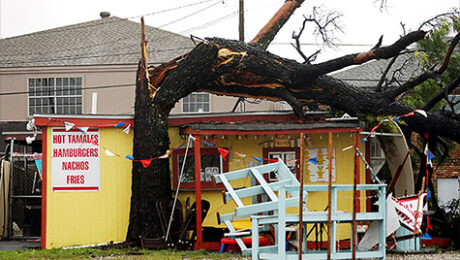
 Tropical Storm Isaac’s slow, rainy march up the Mississippi River valley is expected to cause as much as $2 billion in insured losses, according to one disaster modeling firm.
The storm, which hit Louisiana Tuesday night as a Catagory 1 hurricane, continues to wreak havoc, with heavy rainfall flooding waterways. Working its way up to Missouri, the storm has left more than 800,000 without power in Louisiana, Mississippi, Alabama and Arkansas, power companies told CNN. Hundreds of residents in coastal areas and along rivers have had to be rescued. And 28 Louisiana parishes were without safe, clean water on Friday.
The catastrophe modeling firm AIR Worldwide said early Friday they estimate the storm has caused between $700 million and $2 billion in insured losses. That includes residential property, commercial property, energy production and the interruption of business but excludes most flooding damage.
“Isaac’s slow forward speed and refusal to dissipate will exacerbate wind damage,” said Tim Doggett, chief scientist at AIR.
Earlier this week, another modeling firm, Eqecat, a catastrophe modeling firm, suggested onshore insured damage would run between $500 million and $1.5 billion. The firm has yet to update its figures.
Both firms exclude flooding because the federal government insures against flood damage for most properties.
At those estimates, Isaac, with winds topping out at 80 miles an hour, is far less damaging than Hurricane Katrina, a Category 3 storm, with winds around 125 per hour. Some 1,800 people died after that storm when New Orleans levees failed to hold back rising flood waters. Katrina caused $45 billion in private insurance damage, excluding flood losses, according to the Insurance Information Institute.
But Isaac resembled Hurricane Gustav, a 2008 Category 2 storm that followed a similar path and caused $2 billion in insured damages.
While flooding isn’t included in the newly released damage estimates, Isaac’s total economic damages, including damage due to floods, are expected to grow, as the storm slowly crawls through Arkansas today. More flash flooding and tornadoes are expected.
“It’s looking more disorganized, but it is still putting out quite a bit of rain,” said Charles Dalton, a National Weather Service meteorologist in Little Rock, which was expected to get 5 inches of rain on Friday.
The longer the storm lasts, the risk that more flooding damage occurs, said Michael Kistler, director of model solutions at RMS, another catastrophe modeling firm.
“Because of it’s staying in one place a long time, there’s the potential for storm surge,” Kistler said. “This is not a Katrina,” he added later.
- Published in In the News
Tropical Storm Isaac – Heavy Flooding
Tropical Storm Isaac may have cleared the area and headed north, but South Florida was still being whipped by sheeting rains and gusty winds Monday and Tuesday. Due to all of the rains, South Florida has seen some major flooding in areas like Wellington, Miami-Dade, West Palm Beach, and Tamarac.
Forecasters warned that Isaac was a large storm whose effects could reach out 200 miles from its center. Water may be worse than wind because the storm could push walls of water while dumping rain to flood the low-lying coast in Louisiana, Mississippi, Alabama and the Florida Panhandle
Isaac was packing top sustained winds of 70 mph and had not yet reached hurricane strength late Tuesday morning. The storm system was centered about 80 miles south-southeast of the mouth of the Mississippi River at 11 a.m. EDT and was moving northwest at 10 mph, according to the National Hurricane Center in Miami. It was 165 miles southeast of New Orleans.
Forecasters at the National Hurricane Center warned that Isaac, especially if it strikes at high tide, could cause storm surges of up to 12 feet along the coasts of southeast Louisiana and Mississippi and up to 6 feet as far away as the Florida Panhandle.
Rain from the storm could total up to 14 inches, with some isolated areas getting as much as 20 inches, along the coast from southeast Louisiana to the extreme western end of the Florida Panhandle.
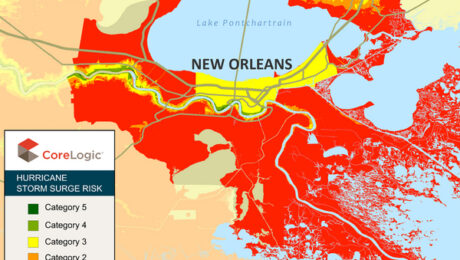
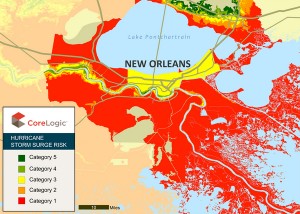
According to new data released today by CoreLogic, there is potentially over $27 billion in exposure to residential property damage from storm surge flooding as Tropical Storm Isaac makes its way across the Atlantic Ocean along a projected path toward the Gulf Coast.
“Based on current forecasts, Tropical Storm Isaac is predicted to strengthen into a Category 1 hurricane and become the first hurricane to impact the United States this year,” said Dr. Howard Botts, vice president and director of database development for CoreLogic Spatial Solutions.
Major metro areas that could potentially feel the impact of hurricane-driven storm surge include New Orleans, La.; Baton Rouge, La.; Biloxi, Miss.; Mobile, Ala.; Pensacola, Fla. and Tallahassee, Fla., depending on where the storm makes landfall.”
The data shows nearly 210,000 total residential properties valued at more than $27.7 billion in seven major metro areas along the Gulf Coast could be at risk for storm-surge related flooding, assuming the storm hits as a Category 1 hurricane. The number of residential properties in each metro area and their respective potential exposure to damage are as follows:
 Hurricane-driven storm-surge flooding can cause significant property damage when high winds, forward movement of the storm and low pressure causes water to amass in front of the storm, pushing a powerful rush over land when the hurricane moves on shore.
The CoreLogic analysis measures damage from storm surge and does not include potential damage from wind and rain associated with hurricanes.
- Published in In the News
Colorado Hail Damage – 800.501.1230

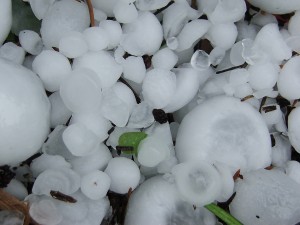
Colorado has already reached an overwhelming and devastating wildfire season reaching historic levels for 2012. New insurance claim estimates from hail, wind, and flooding have caused mayhem on June 6th from South Denver-Metro down to Colorado Springs, and then caused a second round on June 7th in Northern Colorado and Eastern Plains make it the state’s fourth most expensive catastrophe, with an estimated 69,842 auto and property claims totaling $321.1 million.
Insurance companies track both storms as one event so damage estimates include 33,459 auto claims and 36,383 property claims. The majority of the damage was to roofs, along with hail tattered and flooded vehicles.
“Colorado is already experiencing its most destructive wildfire season and Mother Nature doesn’t appear to be letting up any time soon,†says Carole Walker, executive director of the Rocky Mountain Insurance Information Association. “While wildfire can exact a more devastating personal toll, this is a stark reminder that hail is still historically the state’s most costly insured catastrophe due to the widespread damage to cars and property.â€
If you have suffered hail damage to your home or business, it is not something that is easily seen. Be sure to get a licensed public adjuster to come out to your property and evaluate your damage. Be sure that you have someone protecting your best interests because insurance companies have independent adjusters that only protect their best interests. Call American Public Adjusters for a free claim evaluation if you have suffered hail damage, wind damage, storm damage, or flood damage.
- Published in In the News
Knowing Your Insurance Policy

 In our recent discussions with homeowners, it has been brought to our attention that homeowners are under insured. People who purchase a home must have insurance. If you do not want to purchase insurance, then the bank will force a policy on your home. You may think that this is easier, but the bank will get the absolute cheapest policy on your home and if a storm or natural disaster is to hit, you will not be covered.
The first time people actually read their policy is generally after a loss. They discover what is and what isn’t covered. In addition to windstorm damage, for which coverage varies according to location, and flood insurance, which is purchased separately and is required by most mortgage lenders for homes in flood-prone areas, homeowner’s insurance cover many situations that can affect you.
Damage to the dwelling and the contents could be the biggest unexpected disaster awaiting a homeowner who has less coverage then needed. Most policies provide a stated maximum amount of coverage for the dwelling and another amount for contents.
For Dwelling Coverage, it is based on replacement cost, which means that in the event of a total loss to your residence, the policy will only provide reimbursement, up to the policy limit, to replace the structure. A homeowner should buy enough insurance to completely rebuild their home. This is known as replacement cost value. (This amount may not be the home’s actual market value or what the homeowner originally paid for the home.)
In order to figure out how much insurance to purchase for y our home, an accurate appraisal of the home for the replacement cost should be made. Most insurers recommend or even require that a homeowner insure the dwelling for 100% of its full replacement value. Depending on the type of home that you have, some features may not be replaceable in reference to workmanship, materials or practical costs. It is important to discuss these items with the insurer and/or agent.
Coverage for personal property is different. For personal property, policies provide actual cash value coverage for contents which includes depreciation, or full value contents without depreciation. Actual cash value means that if a power surge blows out a 7-year-old television set, the homeowner should know what to expect. Unlike full value contents coverage, which would basically provide you with a brand new television, actual cash value only permits the insurance company to calculate the useful life of the item and then depreciate the item to its present value. A depreciated television from 7 years ago would be insured for only a fraction of what it had cost originally. Homeowners may want to consider Replacement Cost Coverage to be sure that the contents are sufficiently insured.
Homeowners should purchase additional coverage for items that would ordinarily be subject to loss limitations, in addition to making sure that you are covered for replacement rather than actual cash value
In addition to making sure that contents are covered for replacement cost rather than actual cash value, homeowners should purchase additional coverage for items that would ordinarily be subject to loss limitations. Practically all policies cover contents loss up to the policy limit for items that include furniture, clothing, toys, accessories such as lamps and other items which are used for decor. Precise limitations are set in the policy for high-cost items such as jewelry, fine art, furs, electronics, collectibles, oriental rugs and antiques. If a thief comes in and steals a two-carat engagement ring, it will not be covered well enough without what is commonly known as a personal property rider to cover specific, costly items.
Liability Coverage
Liability insurance is very important to a homeowner’s coverage because it helps protect the owner and the family from financial disaster if someone files a claim against the homeowner’s policy, sues the homeowner or if the courts hold the homeowner legally responsible for someone else’s injury or property damage. The standard liability limit for most policies is $100,000, but many people believe that additional protection is needed , especially if the homeowner has sizable assets.
For a small increase in premium, an additional $300,000 to $500,000 may be obtained. Liability coverage protects in three ways: Personal liability, damage to the property of others, and medical expenses for injury to others.
Another way to protect one’s assets is to consider an Umbrella Policy which usually adds $1 million (or possibly more) in excess liability coverage to the homeowner’s property and automobile insurance policies. It also covers claims excluded from most basic policies such as libel, slander, defamation and mental anguish.
For example, most policies provide liability coverage that covers not only accidents that occur on the insured property but accidents that occur elsewhere. If the family dog bites a neighbor in front of another neighbor’s house, for example, the dog owner’s homeowner’s policy will usually compensate the neighbor for injuries and necessary medical expenses.
Theft Off Premises
Most policies automatically insure against the loss of personal property even if that property is not on the insured premises when it is lost. If one goes to the airport with several suitcases and they are stolen, this is probably covered. Talk with your agent and/or your insurance company for details.
Additional Living Expenses
Another automatic benefit of which many homeowners are unaware is coverage for living expenses if the covered premises is damaged to the point of being uninhabitable. Not only should the policy pay for the cost to repair the damage to the dwelling, but it should also reimburse the homeowner for the additional expenses of living elsewhere while the repairs are being made.
What Should A Homeowner Do To Be Prepared?
How does someone find out what is and what is not covered? Read the policy carefully. It’s not likely to be fun reading, but the good news is that if one reads and understands his or her policy before it is needed, this knowledge may save unexpected financial losses should a problem occur. It is always best to talk with one’s insurance agent or the company that issued the policy for details.
Understanding your homeowners insurance policy is best handled before a claim is made. In the case of the contents, an inventory of items room by room is important to have with information such as the date purchased, serial number, the original cost of each item and a brief description. Video tape or still photos is very helpful along with the inventory. These items should be stored in a safe place such as a safety deposit box in a bank or savings and loan institution and not in the home because if the home is destroyed, the chances are the inventory and related photos or tape may also be destroyed.
- Published in Blog
Powerful Storm Causes Flooding & Damage; Monmouth, Ocean, Middlesex, & Bergen County

 Due to the severe heavy rains and lightning on Saturday, Monmouth and Ocean County, as well as Sections of Middlesex, Bergen, and Passaic County have experienced severe property damage, flooding and power outages.
Weather reports indicate that this was a disturbance at the jet stream level, combined with warm, humid air that was already in place, caused the storm. This upper-level disturbance made the moist air rise quickly and condense into thunderstorm clouds, bringing a lot of rain. The storms began to gather strength while crossing eastern Pennsylvania and came down hard on most of New Jersey, particularly Shore areas.
As a result, Freehold Township suffered some of the worst losses, and still have thousands of residents without power. Some of the other areas affected were East Windsor, Long Branch, and Atlantic City.
The bad news is that the state may not be out of the woods yet. With the intense humidity expected to linger a few more days, there is a “potential†for heavy storms to return on Wednesday. A cold front moving in Wednesday could bring thunderstorms containing heavy downpours and damaging winds up and down the eastern seaboard from Florida to New York.
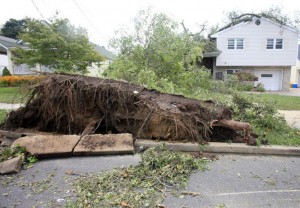
Near Oak Street in Freehold, people stated that they heard terrible noise outside their homes. It was hail. They reported that is sounded like golf balls being thrown at their houses. Some homeowners even hid in their basements off of Enright Avenue. Transformers exploded throughout the neighborhood, sending sparks into the air. Trees fell all through the town, being completely uprooted, falling on homes, garages, and even cars. Fortunately, no one was hurt.
Although no one was injured by the storm, homes and surrounding areas were hit pretty badly. Cleanup of these areas will take a lot of time.
From an insurance standpoint, be sure to photograph all of your damages and contact a public adjuster to get the advice you need. Many people are unaware of what is specifically covered on their policies and the insurance company will do everything in their power to deny your claim. You need to make sure that you have the proper representation and someone standing by your side to justify your damages and provide you with a proper estimate to fix your property. Public Adjusters can assist you with your home, business, or vehicles that have been damaged due to these storms. A public adjuster does not make any money upfront and only takes a percentage if and when they collect money for you. Calling All American Public Adjusters may be the smartest decision you make for your claim. Don’t hesitate to call today and get informed! 800.501.1230
- Published in In the News